
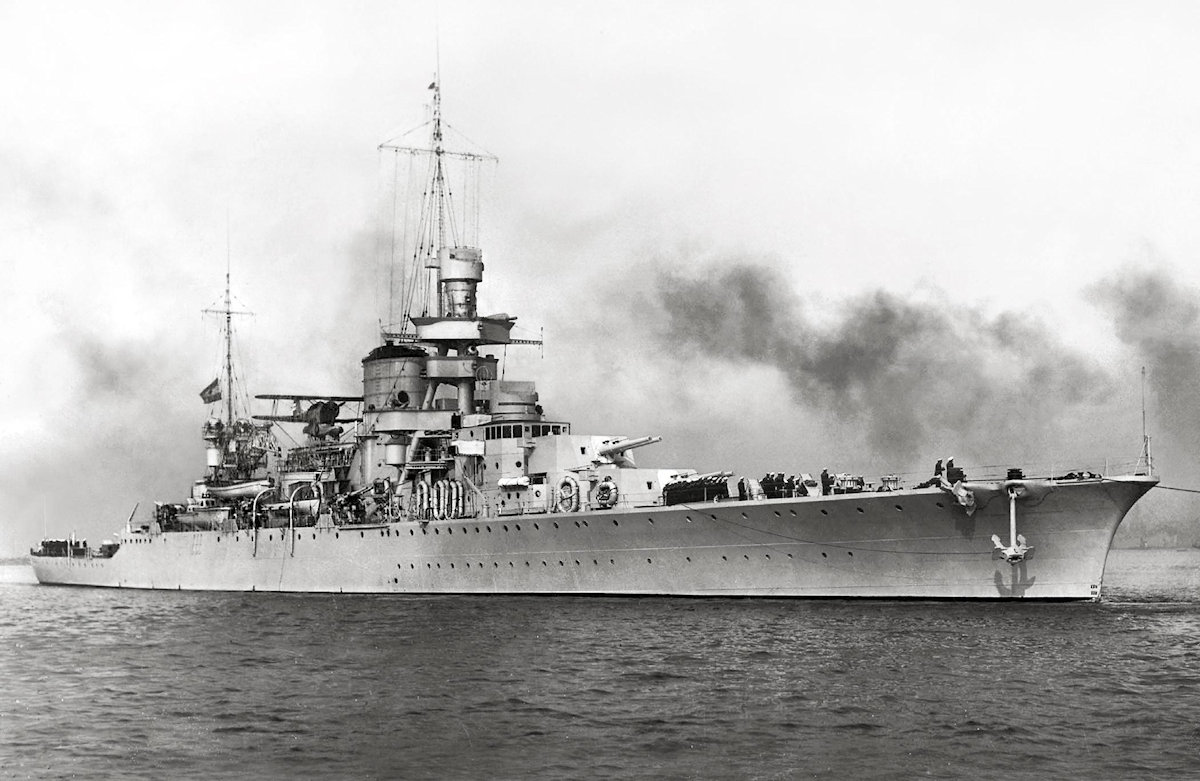
Argentine Heavy Cruiser Almirante Brown (C-1)
The heavy cruiser Almirante Brown (C-1) was one of the most significant surface combatants operated by the Armada Argentina during the interwar period and the early Cold War. Built in Europe during a period of naval modernisation in South America, the ship reflected both regional naval rivalry and the influence of Italian cruiser design in the late 1920s.
Design and construction
Almirante Brown was ordered as part of Argentina’s effort to maintain naval parity with neighbouring Brazil and Chile. The cruiser was constructed by the Italian shipbuilding firm Ansaldo at Genoa in Italy. She was laid down in 1927, launched in 1929, and commissioned into Argentine service in 1931. The vessel was the lead ship of a two-cruiser class that also included ARA Veinticinco de Mayo.
The design was closely related to contemporary Italian heavy cruisers, particularly in hull form and propulsion layout. Standard displacement was approximately 6,800 tonnes, with a full-load displacement exceeding 9,000 tonnes. The cruiser measured about 170 metres in length and was powered by steam turbines capable of producing roughly 85,000 shaft horsepower. This machinery allowed the ship to reach speeds of around 32 knots, making her one of the fastest warships in South American service at the time.
Armament consisted primarily of six 190 mm guns mounted in three twin turrets, two forward and one aft. This main battery was supported by secondary guns, anti-aircraft weapons, and torpedo tubes. Armour protection was relatively light, consistent with cruiser design philosophy of the era, which prioritised speed and firepower over heavy protection.
Operational service
After commissioning, Almirante Brown became one of the principal units of the Argentine fleet. Throughout the 1930s, she participated in training cruises, diplomatic visits, and fleet exercises intended to demonstrate Argentina’s naval capability. These deployments often involved goodwill missions to foreign ports, reinforcing Argentina’s maritime presence and political ties abroad.
Although the cruiser was active during the period of the Second World War, Argentina remained neutral for most of the conflict. As a result, Almirante Brown did not engage in combat operations. Instead, the ship continued routine patrol, training, and readiness duties in the South Atlantic. Her presence nevertheless contributed to coastal defence planning and maritime surveillance during a period of global instability.
By the late 1940s and early 1950s, the cruiser began to show signs of obsolescence as naval technology advanced, particularly with the growing importance of radar, aircraft carriers, and missile systems. Despite these changes, Almirante Brown remained a useful training and fleet support vessel. The cruiser was finally decommissioned in 1961 and later scrapped.


