
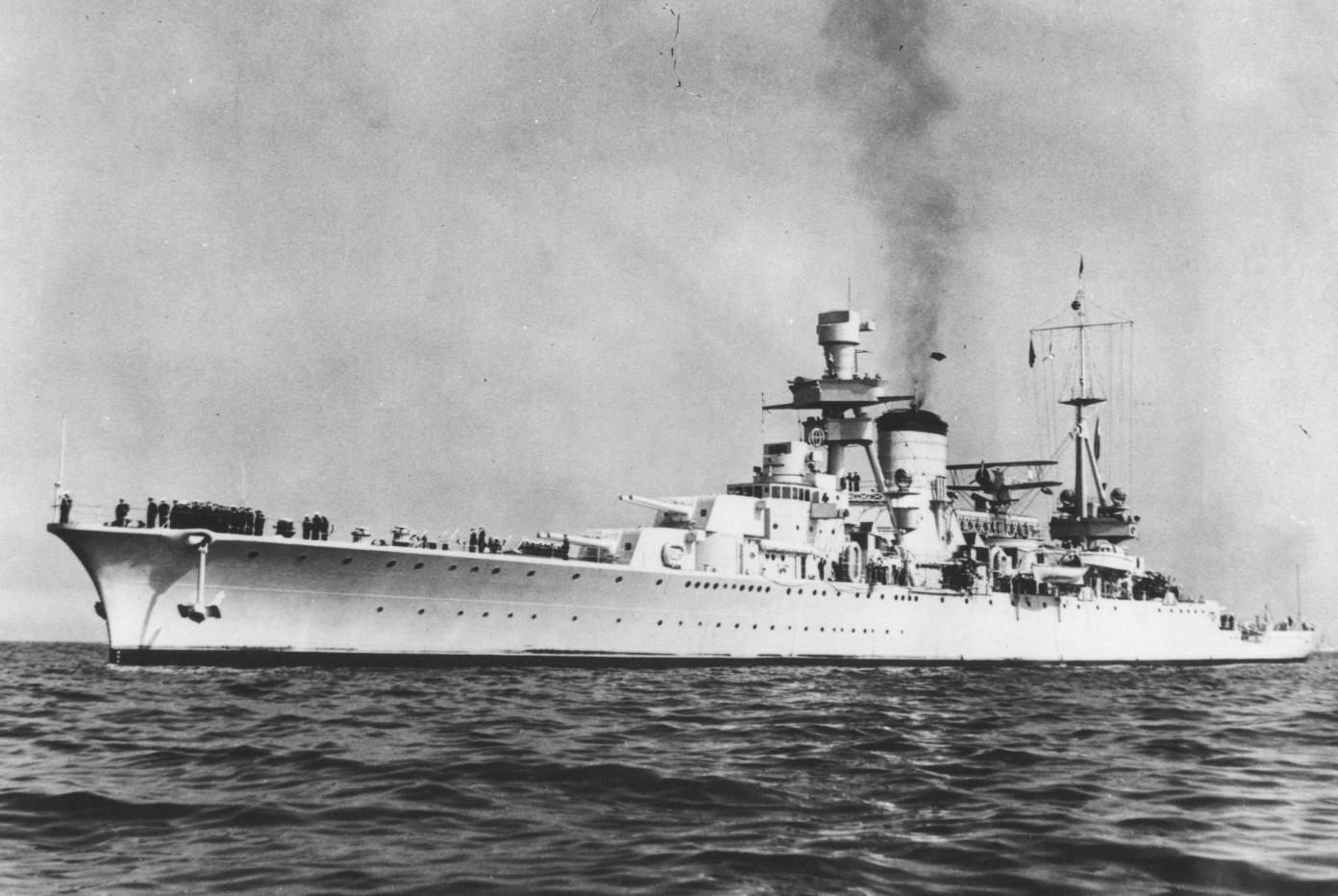
Argentine Heavy Cruiser Veinticinco de Mayo (C-2)
The heavy cruiser Veinticinco de Mayo (C-2) was constructed for the Argentine Navy as part of a naval expansion programme in the late 1920s. She was one of two cruisers of the class, built alongside Almirante Brown. The ships were ordered from the Italian shipbuilder Odero-Terni-Orlando and constructed at Genoa. The cruiser was commissioned in 1931 and represented a modern addition to Argentina’s fleet during the interwar period.
Veinticinco de Mayo displaced approximately 6,800 tons standard and measured about 170 metres in length. Steam turbines powered by oil-fired boilers drove multiple shafts, producing speeds of roughly 32 knots. This performance allowed the cruiser to operate effectively with destroyers and conduct long-range patrol operations in the South Atlantic.
The ship’s main armament consisted of six 190 mm guns mounted in three twin turrets. Although slightly smaller than the 203 mm guns commonly carried by treaty heavy cruisers, these weapons still provided substantial firepower. The lighter gun system reduced overall weight while maintaining effective range and accuracy. Secondary guns, anti-aircraft weapons, and torpedo tubes supplemented the main battery. Armour protection followed contemporary cruiser practice, providing defence against smaller-calibre shells and splinters rather than battleship-level gunfire.
Interwar Service
During the 1930s, Veinticinco de Mayo served as one of the principal surface combatants of the Argentine fleet. The cruiser conducted training cruises, gunnery exercises, and diplomatic visits to foreign ports. These deployments demonstrated national naval capability and strengthened professional experience within the fleet.
Operational doctrine during this period emphasised mobility and fleet coordination. The cruiser’s speed and range made her well suited to patrol duties and to operating as part of a balanced squadron. Regular exercises ensured readiness and allowed crews to refine navigation, signalling, and engineering procedures.
Second World War Period
Argentina remained neutral for most of the Second World War, but the navy continued maritime patrols and training activities. Veinticinco de Mayo operated primarily in home waters, safeguarding sea lanes and maintaining preparedness. Although the cruiser did not participate in combat, these patrols ensured that personnel and machinery remained operationally capable.
By the mid-1940s, naval warfare had begun shifting toward radar-directed gunnery, improved anti-aircraft defence, and increasing reliance on air power. Ships built in the early treaty era required modification to remain effective.
Modernisation and Final Years
After the war, Veinticinco de Mayo underwent refits intended to extend her service life. These upgrades included improved fire-control systems, radar installation, and strengthened anti-aircraft armament. Such modifications reflected the changing nature of naval threats and the growing importance of detection technology.
Throughout the 1950s, the cruiser continued serving as a training and fleet-support vessel. She participated in exercises and ceremonial duties while helping prepare new generations of Argentine naval personnel. Despite these efforts, ageing machinery and evolving naval technology gradually reduced her operational value.
Veinticinco de Mayo (C-2) was decommissioned in 1960 after nearly thirty years of service and later sold for scrap.


