
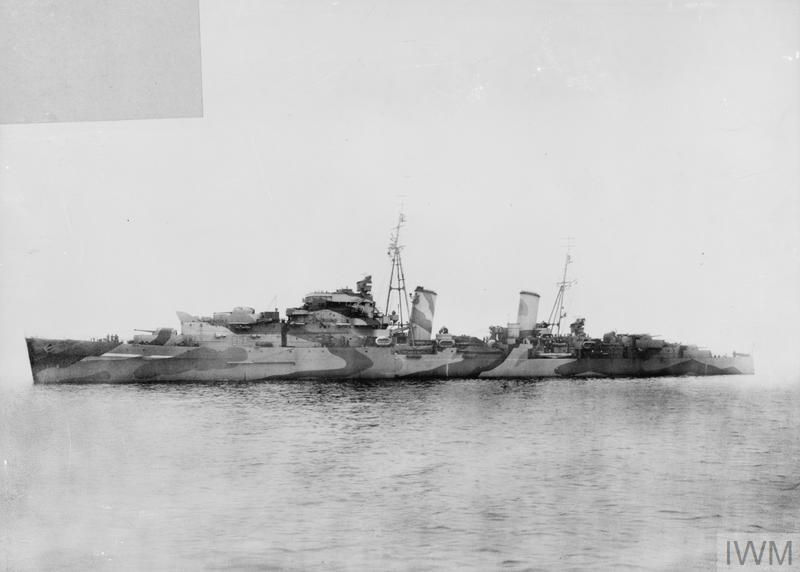
HMS Charybdis British Light Cruiser
HMS Charybdis was a British Dido-class light cruiser built for the Royal Navy during the Second World War. Launched in 1940 and commissioned in December 1941, she was designed primarily as an anti-aircraft cruiser to protect fleets and convoys from air attack. Unlike most ships of her class, Charybdis was armed with eight 4.5-inch dual-purpose guns, originally intended for the Danae-class cruisers. This gave her a distinctive appearance and made her well suited for both anti-aircraft and surface combat duties.
Following her commissioning, HMS Charybdis served in the Mediterranean and Atlantic theatres. She took part in Operation Pedestal in August 1942, one of the most important convoy operations of the war, aimed at supplying the besieged island of Malta. During this operation she helped defend merchant ships against repeated German and Italian air attacks. Charybdis later participated in Allied operations off North Africa and supported the invasion of Sicily in 1943.
In the autumn of 1943, Charybdis operated in the English Channel and Bay of Biscay, hunting German blockade runners and escort vessels. On the night of 22–23 October 1943, while leading a force intended to intercept the German blockade runner Münsterland, she was attacked by German torpedo boats off the coast of Brittany. Charybdis was struck by torpedoes and sank rapidly, with heavy loss of life. Over 400 officers and sailors were killed.


