
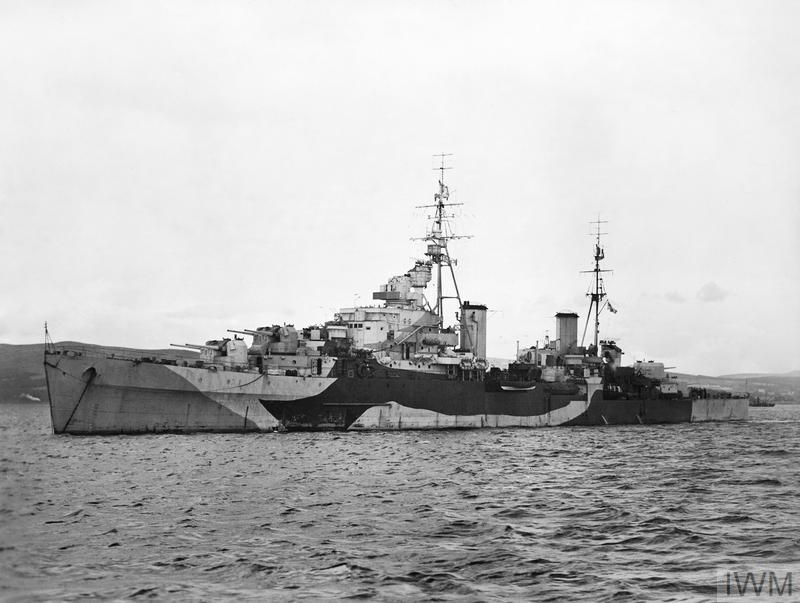
HMS Spartan British Light Cruiser
HMS Spartan was a British light cruiser of the Dido class, built for the Royal Navy during the Second World War. Constructed by Vickers-Armstrong at Barrow-in-Furness, she was launched in 1942 and commissioned on 12 July 1943. Like other ships of her class, Spartan was designed primarily for fleet air defence, carrying a main armament of rapid-firing 5.25-inch dual-purpose guns capable of engaging both aircraft and surface targets.
After entering service, Spartan operated mainly in the Mediterranean theatre. She took part in convoy protection, fleet screening duties, and naval bombardments in support of Allied operations. During 1943 she was involved in operations around Italy following the Allied invasion of Sicily and the Italian mainland. Her speed and anti-aircraft firepower made her valuable in protecting larger warships and transport convoys from enemy aircraft.
In January 1944, Spartan was stationed off Anzio during Operation Shingle, the Allied amphibious landing in Italy. On 29 January she was attacked by German aircraft using a guided bomb, believed to have been a Henschel Hs 293 radio-controlled glide bomb. The weapon struck the cruiser and caused catastrophic damage. Spartan sank quickly in shallow water with heavy loss of life among her crew.


