
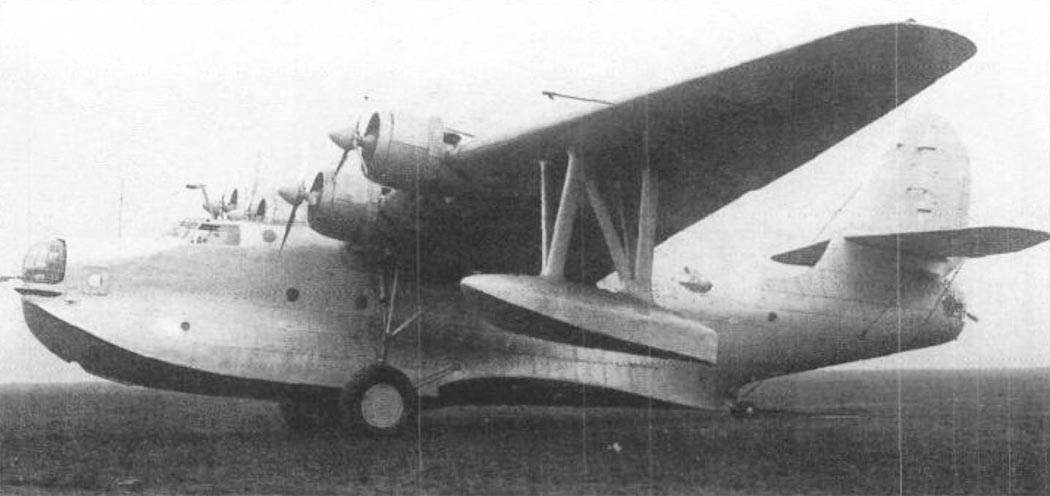
Tupolev MTB-2
The Tupolev MTB-2 (ANT-44) was a large four-engine flying boat developed by the Tupolev Design Bureau during the mid-1930s for the Soviet Naval Aviation. Its designation, MTB-2 (Morskoi Tyazhely Bombardirovshchik – Heavy Naval Bomber), reflected its intended role as a long-range maritime bomber and reconnaissance aircraft capable of striking enemy naval forces far from Soviet shores.
The aircraft was an all-metal, high-wing monoplane with a deep flying boat hull and retractable beaching gear for operation from both water and land. It was powered by four radial engines mounted on the wing leading edge. The first prototype used four 800 hp M-85 engines, while the improved second prototype was fitted with four more powerful M-87A engines producing up to 950 hp each.
The first ANT-44 flew on 19 April 1937. Although the initial prototype was lost during testing, the second aircraft successfully completed state trials and established several international flying boat records for speed and payload. Following the German invasion of the Soviet Union in 1941, the surviving aircraft entered operational service over the Black Sea. It carried out night bombing raids against targets in Romania, attacked Axis troop concentrations, and later evacuated wounded personnel from the besieged city of Sevastopol. To increase its bomb load, its amphibious landing gear was removed before combat operations. The sole operational ANT-44 was shot down by German fighters during take-off in August 1942.


