
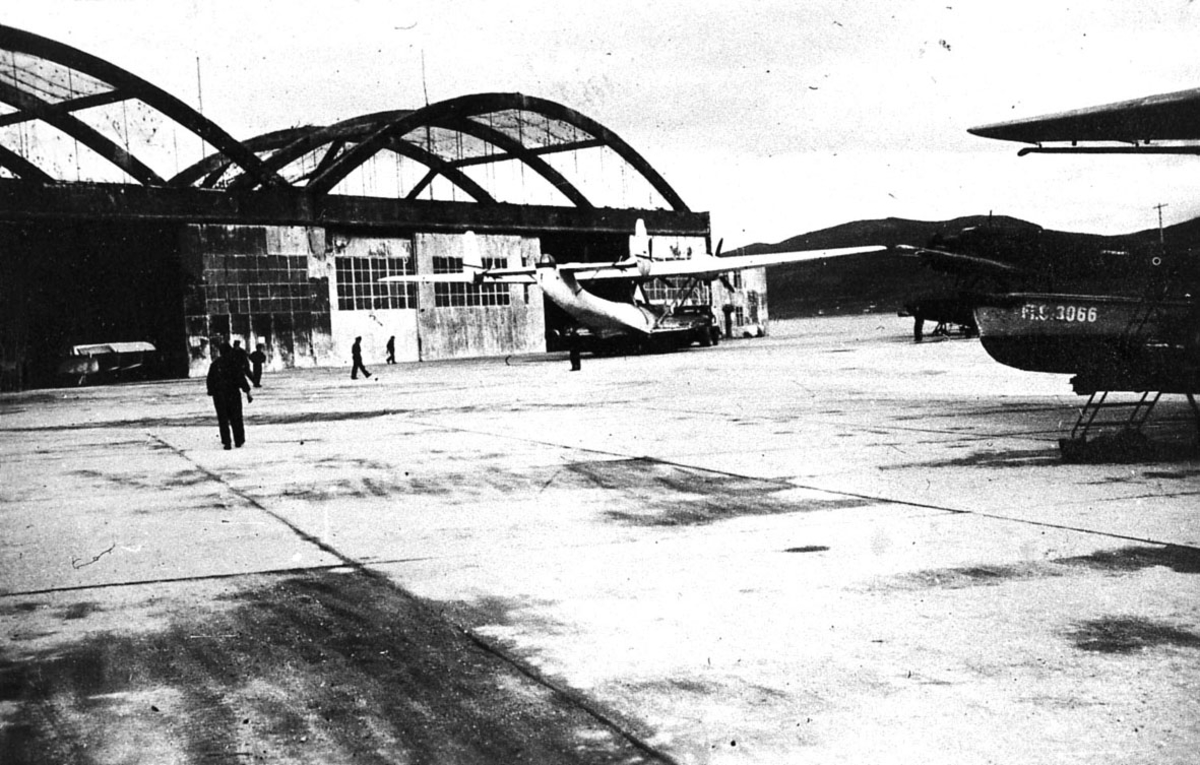
Dornier Do 24 in Norwegian Service
The Dornier Do 24 saw limited post-war use in Norway after the German surrender in 1945. Two aircraft were taken over by the Royal Norwegian Air Force from former Luftwaffe stocks. They were not acquired as part of a planned long-term equipment programme, but were retained because they were available at a time when aircraft and trained personnel in northern Norway were still limited.
The aircraft were operated from Skattøra, the seaplane station at Tromsø that had been developed by the Luftwaffe during the occupation. In Norwegian service the Do 24s were nominally attached to No. 333 Squadron, Royal Norwegian Air Force, although their operation appears to have been separate from the squadron’s later standard Catalina activity. The aircraft were flown by German pilots, as these crews already had experience on the type and could operate them during the immediate post-war period.
Their main work was transport and support flying connected with the removal of German mines and military material. They carried German personnel involved in mine-clearance duties and were also used for ambulance flights, including the movement of injured personnel. The Do 24’s flying-boat configuration made it useful in northern Norway, where suitable land airfields were limited and many routes were more easily served by water operations.
The two aircraft have been associated with Werknummern 3300 and 3335, although surviving photo captions do not always identify which individual aircraft is shown. They were moved south to Fornebu in October 1945, but returned to northern service for the 1946 season. Their use was short-lived. From 1946, No. 333 Squadron operated Consolidated PBY Catalinas, which were better suited to Norway’s developing post-war maritime patrol, transport and search-and-rescue requirements. The Do 24s therefore remained a temporary expedient rather than a continuing Norwegian service type.
