
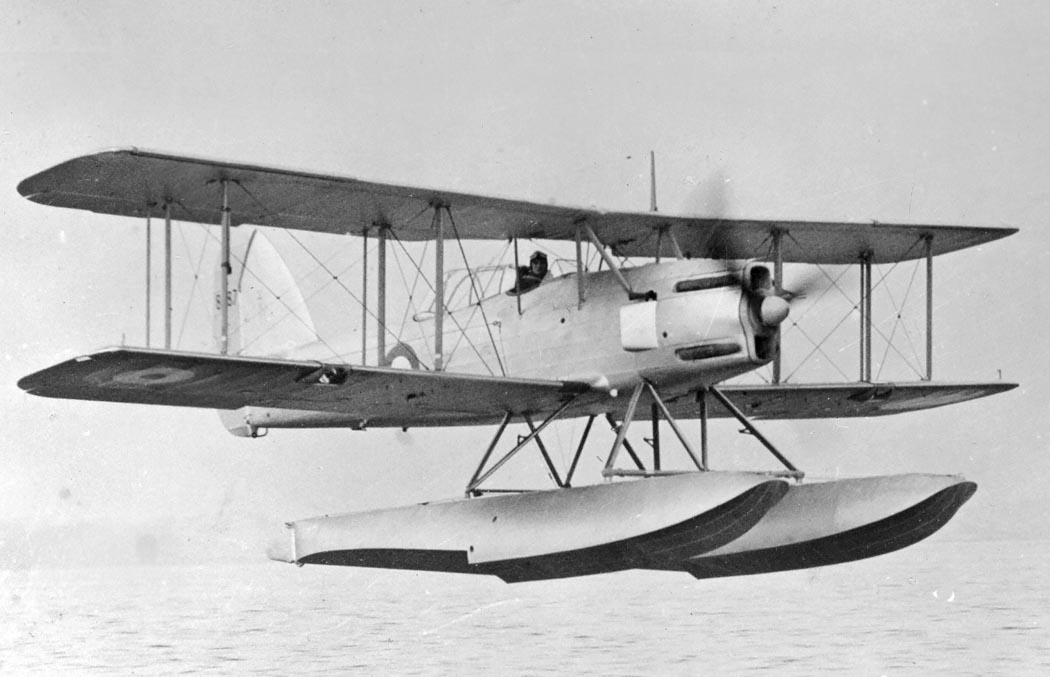
Fairey Seafox
The Fairey Seafox was a British naval reconnaissance floatplane of the 1930s, designed and built by the British company Fairey Aviation. Although produced in relatively small numbers, the Seafox gained a notable place in Royal Navy history through its service during the early years of the Second World War.
Developed to meet an Air Ministry requirement for a catapult-launched spotter-reconnaissance aircraft, the Seafox first flew in May 1936. It was a single-engine, two-seat biplane powered by a 395 hp Napier Rapier H-engine. The aircraft featured all-metal construction with fabric-covered flying surfaces and was designed to operate from both warships and shore bases. Most Seafox aircraft were equipped with twin floats while two were completed as landplanes.
The Seafox entered service with the Royal Navy’s Fleet Air Arm in 1937. Its primary role was artillery spotting, reconnaissance, and communication duties for cruisers and battleships. Aircraft were carried aboard several Royal Navy cruisers, where they could be launched by catapult and recovered by crane after landing on the water. Its performance was modest, with a maximum speed of 124 mph (200 km/h).
The aircraft’s most famous operational achievement occurred during the Battle of the River Plate in December 1939. During the engagement between the British cruisers HMS Ajax, HMS Achilles, and HMS Exeter and the German heavy cruiser Admiral Graf Spee, a Seafox from HMS Ajax played a crucial role. Piloted by Lieutenant E. G. Lewin, the aircraft conducted reconnaissance and acted as an artillery spotter, providing valuable information on enemy movements and assisting British gunnery. The Seafox was the only British aircraft actively involved in the battle and contributed significantly to the pressure placed on Admiral Graf Spee, which eventually sought refuge in Montevideo before being scuttled by its crew.
By the outbreak of the Second World War, however, the Seafox was already becoming obsolete. It was progressively replaced by the more powerful and versatile Supermarine Walrus amphibian, which offered superior range, payload, and operational flexibility.
Despite its brief frontline career, the Fairey Seafox continued to serve in secondary duties, including training and communications roles, until being withdrawn from service during the war. Only a small number were built, with production ending after 64 aircraft (in addition to the two prototypes).
Photographs
Prototypes


HMS Ajax

HMS Asturias

HMS Canton


HMS Pretoria Castle

Miscellaneous Seafoxes


Seafox Detail


