
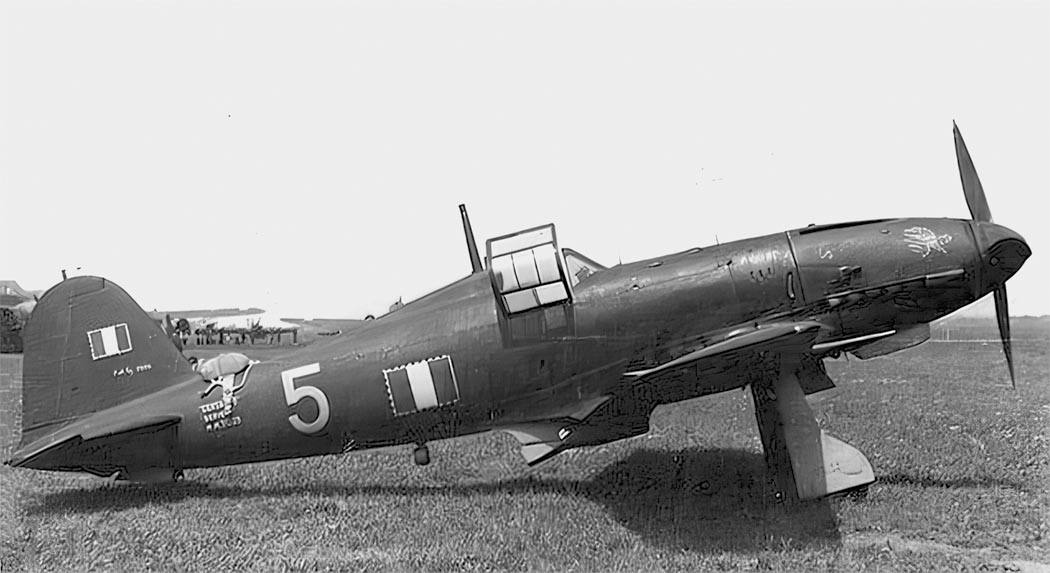
Fiat G.55 Centauro in Aeronautica Nazionale Repubblicana (ANR) Service
The Fiat G.55 Centauro was one of the most capable Italian fighter aircraft to see operational service in the final phase of the Second World War, and it became particularly associated with the fighter units of the Aeronautica Nazionale Repubblicana (ANR), the air arm of the Italian Social Republic in northern Italy after the September 1943 armistice.
Transition to ANR service
Before Italy’s surrender to the Allies, the G.55 had entered limited service with the Regia Aeronautica in 1943. The aircraft quickly demonstrated strong performance against Allied fighters, especially at medium and high altitudes. After the armistice divided Italy, production facilities in northern Italy fell under German control, allowing continued manufacture of the type for ANR units.
The ANR inherited a small but valuable number of G.55 fighters, which became central to its air-defence mission. Compared with earlier Italian fighters such as the Macchi C.202 and C.205, the G.55 offered improved structural strength, heavier armament, and better high-altitude performance. These characteristics made it well suited to intercepting Allied bomber formations operating over northern Italy.
Operational employment
ANR G.55s were primarily flown by the Gruppo Caccia “Montefusco-Bonet”, which became the principal unit operating the type in combat. From bases in northern Italy during 1944 and early 1945, the fighters were tasked with defending industrial regions, transport infrastructure, and German military installations from Allied air attack.
The G.55’s armament, typically consisting of three 20 mm cannon and two 12.7 mm machine guns, gave ANR pilots a meaningful ability to damage heavy bombers. In interception missions against Allied formations, pilots valued the aircraft’s stable gun platform and robust construction. Its Daimler-Benz DB 605 engine provided competitive performance compared with contemporary Allied fighters such as the P-51 Mustang and Spitfire, although ANR units operated under severe logistical constraints.
German evaluation and supply difficulties
The G.55 was also highly regarded by the Luftwaffe, which evaluated it in 1943 alongside other Italian “Serie 5” fighters. German test pilots considered it an excellent interceptor, particularly at altitude. However, the aircraft’s complex manufacturing process meant production remained slow. Industrial disruption, material shortages, and Allied bombing further reduced output during ANR service.
As a result, only a limited number of G.55s were available to ANR fighter groups at any given time. Maintenance difficulties and fuel shortages further constrained operations in the final months of the war.


