
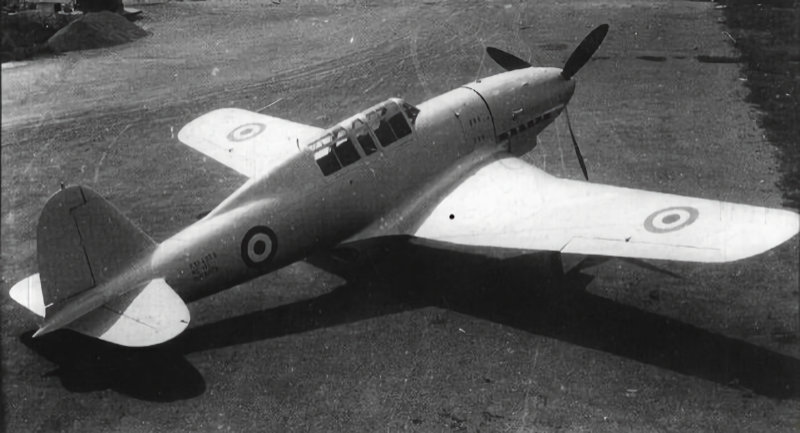
Fiat G.55 Centauro in Service With The Italian Air Force
The Fiat G.55 Centauro had a limited but historically significant post-war career with the newly reconstituted Italian Air Force, the Aeronautica Militare Italiana, formed in 1946 after the abolition of the monarchy and the disbandment of the Regia Aeronautica. Although designed as a front-line fighter during the Second World War, the G.55’s post-1945 service reflected Italy’s transitional military and industrial circumstances.
Originally produced by Fiat Aviazione, the G.55 had been one of the most capable Italian fighters of the war. Post-armistice production continued in northern Italy under the Italian Social Republic for the Aeronautica Nazionale Repubblicana. At war’s end, several incomplete airframes and components remained at Fiat’s Turin facilities. With Italy prohibited from possessing large numbers of combat aircraft under the 1947 Peace Treaty, these airframes were completed primarily in advanced trainer form.
The principal post-war variant was the G.55A and the dual-control G.55B. These aircraft were powered by the Fiat-built Daimler-Benz DB 605 engine, redesignated the RA.1050 Tifone. Armament was generally reduced or deleted in accordance with treaty limitations, and the aircraft were used mainly for fighter conversion and advanced training rather than operational air defence.
In service with the Aeronautica Militare between approximately 1946 and 1951, the G.55 equipped several fighter schools and training units. It provided a valuable bridge between wartime piston-engined fighters and the first generation of jet aircraft that Italy began receiving in the early 1950s under NATO auspices.
However, the aircraft’s operational lifespan was brief. The DB 605-derived engines were maintenance-intensive, and spare parts were increasingly scarce in the austere post-war economy. Furthermore, the rapid advent of jet propulsion rendered high-performance piston fighters obsolete for front-line service. By the early 1950s, surviving G.55s were withdrawn from Italian service.
Although overshadowed by jet developments, the Fiat G.55’s post-war career was important institutionally. It allowed Italy to maintain a domestic aeronautical manufacturing base, sustain pilot training standards during political transition, and preserve technical continuity between the wartime Regia Aeronautica and the Cold War Aeronautica Militare.


References
Italian Aircraft of WWII: Fiat G.55A “Post War Service”
“Centauro”: the story continuing (WW2incolor.com)
PlaneHistoria: Fiat’s G.55 was a Jewel of Italian Aviation
Fiat G.55 Centauro, Wikipedia