
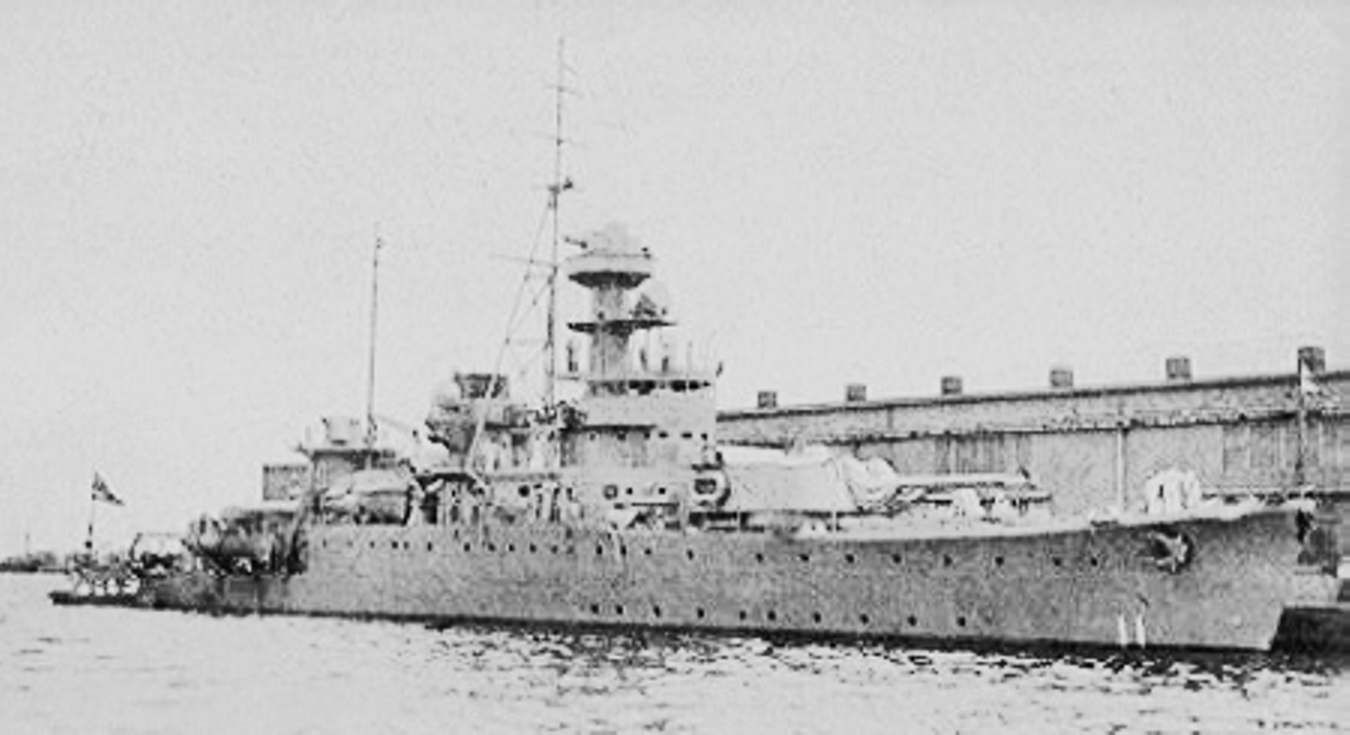
HTMS Sri Ayudhya
HTMS Sri Ayudhya was a coastal defence ship of the Royal Thai Navy and one of the most notable warships in Thailand’s modern naval history. Built in Japan by the Kawasaki Dockyard at Kobe, she was launched in 1938 and commissioned in 1939. Named after the ancient Siamese capital of Ayutthaya, Sri Ayudhya and her sister ship HTMS Thonburi were designed to provide Thailand with powerful coastal defence capabilities.
The ship displaced approximately 2,265 tons and was heavily armed for her size. Her main battery consisted of four 8-inch (203 mm) guns mounted in two twin turrets, giving her firepower comparable to that of much larger cruisers. She also carried secondary guns and anti-aircraft weapons, making her one of the most formidable vessels in Southeast Asia at the time.
Sri Ayudhya saw service during the Franco-Thai War of 1940–41, although her sister ship Thonburi played the more prominent combat role during the Battle of Ko Chang. Following the war, Sri Ayudhya remained an important unit of the Thai fleet.
Her career ended dramatically during the Manhattan Rebellion of June 1951, an attempted coup by naval officers against the Thai government. During fighting in Bangkok, the ship was attacked by government forces, including aircraft and artillery. Severely damaged and set ablaze while anchored on the Chao Phraya River, Sri Ayudhya eventually sank. The wreck was later raised and scrapped.


