
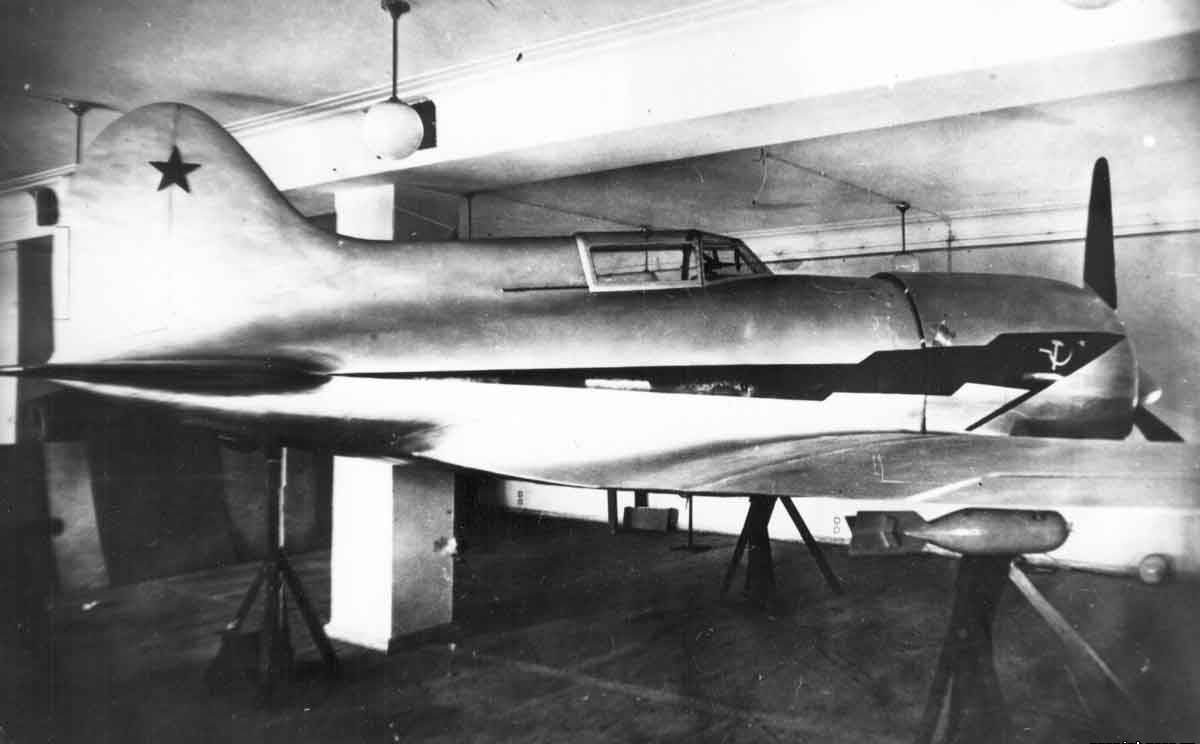
Silvansky I-220 IS
The Silvansky I-220 IS was one of the more obscure and controversial Soviet fighter projects of the early Second World War. Developed under the direction of Aleksandr Silvansky, the aircraft emerged during a period of intense expansion and experimentation within the Soviet aviation industry, when numerous design bureaux competed to produce high-performance combat aircraft for the Soviet Air Forces.
Silvansky himself was an inexperienced designer, and his rapid rise was due less to technical merit than to political connections. As such, he was able to secure approval and resources for his design bureau despite limited prior achievements. The I-220 project managed to bypass some of the more rigorous evaluation processes typically applied to Soviet aircraft development.
The I-220 was conceived as a high-performance interceptor fighter, intended to compete with contemporary designs from more established bureaux such as those led by Artem Mikoyan and Mikhail Gurevich, as well as Semyon Lavochkin. Structurally, it followed a fairly conventional layout for the era, with a low-wing monoplane configuration, retractable landing gear, and an enclosed cockpit. However, the aircraft’s design and construction were marred by fundamental engineering shortcomings.
One of the most significant issues was its excessive weight. The I-220 was substantially heavier than anticipated, which had immediate negative consequences for its performance. Coupled with this was an underpowered engine installation.
Poor design led to the undercarriage being too long to retract into the wing recesses. To rectify this the undercarriage was shortened. This in turn resulted in the propeller having insufficient ground clearance. Silvansky shortened the propeller blades to compensate. This all led to poor performance and an inefficient engine/propeller power balance.
Flight testing resulted in scathing pilot reviews. Poor handling and instability almost killed test pilots, with one refusing to fly the I-200 again.
The project soon attracted scrutiny from Soviet authorities, particularly as wartime pressures demanded efficient allocation of industrial resources. The deficiencies in its design, combined with the questionable circumstances of its approval, led to growing criticism within the aviation establishment.
The programme was cancelled, and Silvansky’s design bureau was dissolved. A second prototype of the IS had been under construction but this was halted and presumably, it was scrapped. The first prototype IS was seized and shipped to the Moscow Aviation Institute where it was put on display as an illustration of how not to design an aircraft. Silvansky was banned from further involvement in aviation and, amazingly, escaped both prosecution.


