
Supermarine Walrus in Civilian Use
Although best known as a Royal Navy and Commonwealth amphibious reconnaissance aircraft of the Second World War, the Supermarine Walrus also had a post-war civilian career. Its robust construction, amphibious capabilities, and ability to operate from remote waterways made it attractive to a variety of commercial operators and government agencies after military surplus aircraft became available in large numbers following 1945.
Australian Civilian Use
One of the most significant civilian users was the Australian company Amphibious Airways of Rabaul. During the immediate post-war period, they acquired several ex-Royal Australian Air Force Walrus aircraft for use in New Guinea and northern Australia. The rugged amphibians were ideally suited to regions where airfields were scarce but rivers, harbours, and coastal waters provided convenient landing areas. They carried passengers, freight, mail, and supplies to isolated communities that were otherwise difficult to reach. The aircraft’s ability to operate from both land and water offered exceptional flexibility in areas with limited infrastructure.
New Zealand Civilian Use
A Walrus also found employment with Amphibian Airways Ltd in New Zealand. The aircraft was intended to establish remote coastal transport links, flying passengers and cargo to the isolated destinations of Stewart Island and the Fiordland lochs. Originally serving with the RNZAF with serial NZ158, it operated primarily as a maritime reconnaissance and training amphibian from land bases like Hobsonville and aboard cruisers. In 1947, the surplus biplane was sold into the civil sector and officially registered as ZK-AMJ under the ownership of Amphibian Airways Ltd, based in Invercargill. Its civilian tenure ended on October 15, 1947. While attempting to land at Ocean Beach near Bluff, the aircraft crashed, resulting in the deaths of the pilot and two passengers.


Use in the Whaling Industry
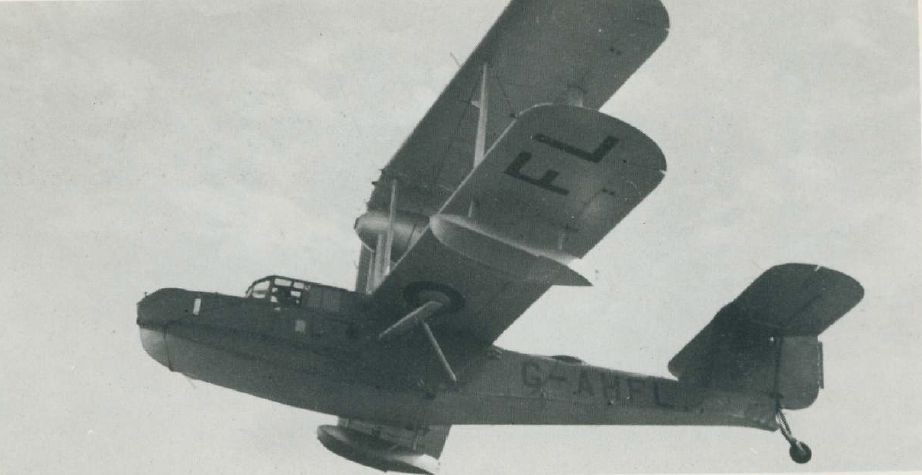
United Whalers used surplus Walruses for whale-spotting in the Southern Ocean. Operating from the factory ship MV Balaena, which was uniquely equipped with a surplus naval aircraft catapult. The aircraft (painted bright yellow for high visibility) were modified with electrical sockets to power heated flying suits and cabin heaters to endure the harsh, five-hour flights over the freezing Antarctic. They also utilized a “mat pickup” hook under the nose to aid in recovery onto the ship. In order to reduce weight, the main wheels were removed and the wing recesses plated over. The tail wheel was retained as it acted as a rudder.
Balaena housed two aircraft in a hanger (G-AHFL “Boojum” and G-AHFO “Snark”). A third was embarked on the catapult, but this complicated aircraft movements and was left in South Africa (G-AHFM, “Moby Dick”).


Scottish Civilian Use
Scottish Airlines operating out of Glasgow – Prestwick Airport acquired a Supermarine Walrus Mk I which was registered as G-AJNO. It was utilized for passenger charter, coastal transport, and utility flights around the British Isles. G-AJNO was broken up for scrap around 1958-59.

