
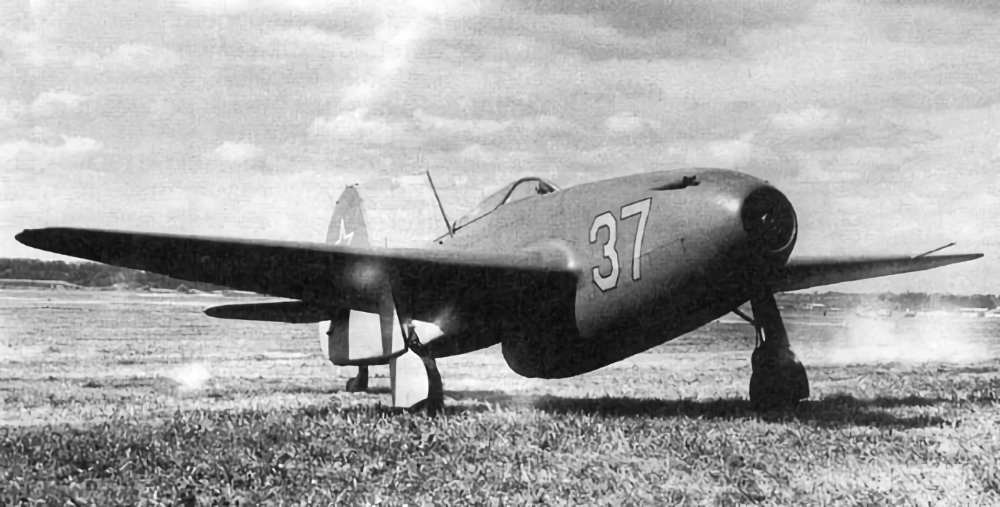
Yakolev Yak-15 Soviet Jet Fighter
The Yakovlev Yak-15 (NATO reporting name: Feather) was one of the Soviet Union’s first operational jet fighters and represented an important stepping stone between the piston-engine fighters of the Second World War and the sophisticated swept-wing jets that followed. Although quickly rendered obsolete by more advanced designs, the Yak-15 played a vital role in introducing Soviet pilots and ground crews to jet aviation. It first flew on 24 April 1946, entered service in 1947, and approximately 280 aircraft were produced.
Rather than designing an entirely new aircraft, the Yakovlev Design Bureau adopted a pragmatic approach by modifying the highly successful Yakovlev Yak-3 fighter. The rear fuselage, wings, tail and conventional tailwheel undercarriage were largely retained, while the piston engine was replaced by a Klimov RD-10 turbojet, itself a Soviet-built version of the captured German Junkers Jumo 004 engine. This allowed the Soviet aviation industry to field a jet fighter rapidly while more advanced aircraft were still under development.
The installation of the turbojet beneath the forward fuselage gave the Yak-15 a distinctive appearance. A heat-resistant steel shield protected the lower rear fuselage from the engine’s hot exhaust, while the air intake occupied the aircraft’s nose. The aircraft remained relatively lightweight and retained much of the excellent handling that had made the Yak-3 popular with Soviet pilots. Pilots transitioning from piston-engine fighters found the Yak-15 familiar and forgiving, making it an ideal conversion aircraft despite the entirely new propulsion system.
Performance was respectable for the immediate post-war period. The Yak-15 could reach speeds of approximately 786 km/h (488 mph), climb rapidly, and operate at altitudes exceeding 13,000 metres. Armament consisted of two 23 mm NS-23 cannon, giving it adequate firepower against contemporary bombers and fighters. However, fuel consumption was high, resulting in a combat range of only about 510 kilometres, one of the aircraft’s principal limitations.
Although officially classified as a fighter, the Yak-15 saw little operational combat training. By the time it entered service, more advanced aircraft such as the MiG-9 and the swept-wing MiG-15 were already in development or entering production. Instead, the Yak-15 was used as a conversion trainer, allowing experienced wartime fighter pilots to become familiar with jet engine characteristics, higher landing speeds, throttle response, and new maintenance procedures before progressing to more capable aircraft.
A 2-seat training version (Yak-21) was developed was did not proceed past the prototype stage.


