
Sensational Sensō-ji Temple Tokyo
Sensō-ji, in Tokyo’s Asakusa district, traces its beginnings to 628 CE. According to temple tradition, two brothers fishing in the Sumida River pulled a small statue of Kannon, the bodhisattva of compassion, from the water. A local leader recognised its religious significance and helped establish a place to honour it. The story remains central to the temple’s identity, although it is a founding tradition rather than a documented account of the event.
In 645, a Buddhist priest named Shōkai built a hall for the statue. He also decided that it should be kept hidden from public view, a practice the temple maintains today. Over the following centuries, Sensō-ji grew into an important place of worship. As Edo, the city now known as Tokyo, expanded under the Tokugawa shoguns, pilgrims and visitors helped Asakusa develop into a lively temple district.
The temple’s history includes repeated rebuilding. Its former main hall, constructed under the third Tokugawa shogun, Tokugawa Iemitsu, was destroyed during the Tokyo air raid of 10 March 1945. Donations from worshippers across Japan funded a new main hall, completed in 1958.
Getting There
As we were staying in Shinjuku, we took the subway to Sensō-ji. We caught the Ōedo Line to Ueno-okachimachi, then followed the signs to nearby Ueno-hirokoji Station for the Ginza Line to Asakusa. The journey was easy to navigate, with signs and announcements in both Japanese and English. It took about 45 minutes by train, followed by a 10-minute walk to the temple. The fare was ¥330 in September 2026.
What to Expect
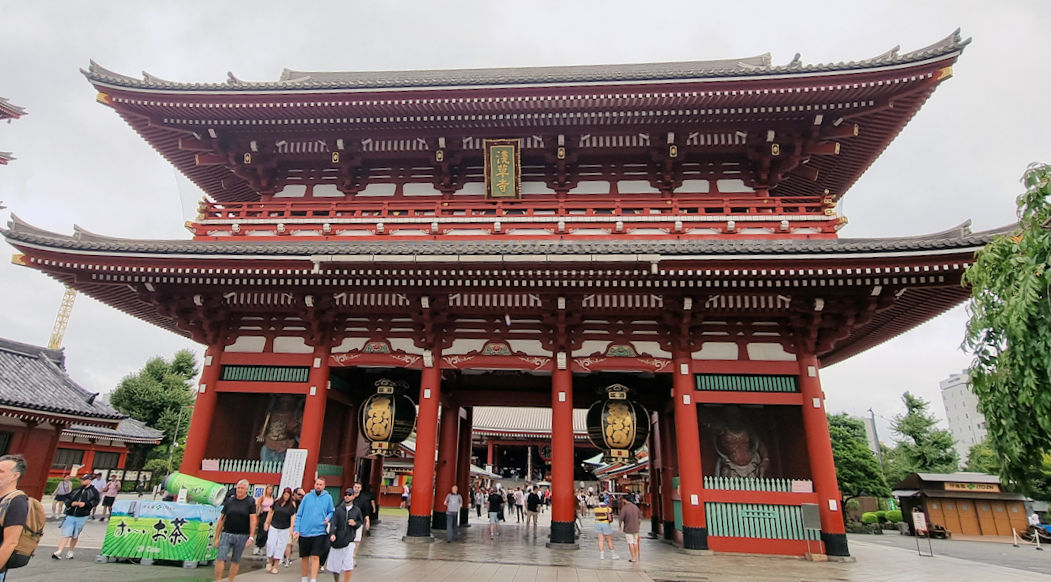
Sensō-ji is one of Tokyo’s most popular attractions, so we expected crowds, but we were surprised by how busy it was so early. We arrived at around 8:30 a.m., and even though it was raining, visitors were already gathering around the main approach. Fortunately, we still managed to photograph the Hōzōmon Gate and the five-storey pagoda without too many people in the background. The rain made the red buildings especially striking.
The main hall felt quieter than the grounds outside. It was still crowded, but the atmosphere quieter as people paused to pray and pay their respects. Remember that Sensō-ji is an active place of worship as well as a famous tourist destination.
The gate and main hall draw much of the attention, but there is more to see if you wander beyond them. Smaller temples, shrines and gardens around the grounds offer a chance to explore at a slower pace and appreciate the character of the area.
On the way in, Nakamise shopping street leads towards Hōzōmon Gate. Its stalls sell souvenirs, traditional crafts and snacks, and there is plenty to catch your eye even if you are only browsing. The street can become crowded, so it is worth allowing extra time for photographs and a look around.
After visiting the temple, we explored the surrounding streets of Asakusa finding another gate on the Okuyama Omairimachi Shopping Street.


To find out more about Japan, see our blogs here


Leave a Reply