
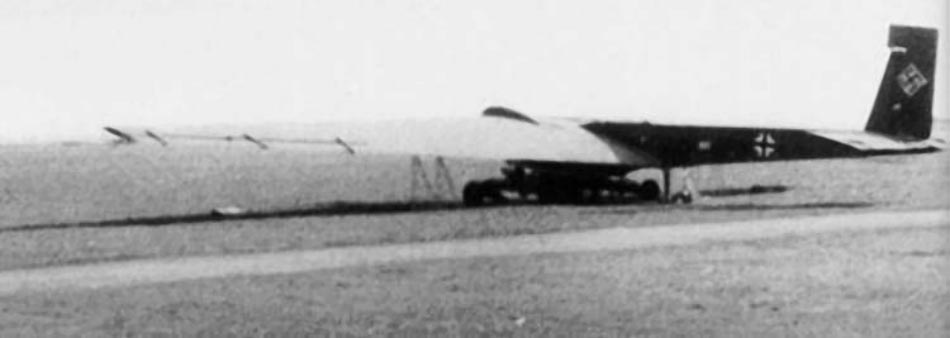
Junkers Ju 322 Mammut Transport Glider
The Junkers Ju 322 Mammut (Mammoth) was an experimental German heavy transport glider developed during the Second World War. Designed in late 1940, it aimed to transport heavy military equipment and troops during airborne operations.
Junkers developed the aircraft in competition with the Messerschmitt Me 321 Gigant. The Luftwaffe required a glider capable of transporting tanks, artillery and other heavy equipment. However, unlike the Messerschmitt design, the Ju 322 used almost entirely wooden construction to conserve strategic materials.
The aircraft featured an enormous flying-wing configuration, with a wingspan of 62 metres and a length of 30.25 metres. Its central wing section contained a large cargo compartment, accessed through a door in the leading edge. Meanwhile, the cockpit occupied an offset position above the cargo area.
Initially, engineers intended the Ju 322 to carry approximately 20 tonnes. However, structural weaknesses forced them to reduce its payload to around 11 tonnes. During testing, a tank damaged the wooden cargo floor, highlighting serious construction problems.
The first prototype flew in April 1941, towed by a Junkers Ju 90 transport aircraft. Unfortunately, the glider displayed severe instability, making towing extremely dangerous. Although it landed safely, recovering the enormous aircraft proved difficult.
Following additional testing, German authorities cancelled the project in May 1941. Only two prototypes reached completion, and just one flew.
The prototypes and partially completed aircraft were subsequently dismantled. Instead, the Luftwaffe selected the more practical Messerschmitt Me 321 for production


