
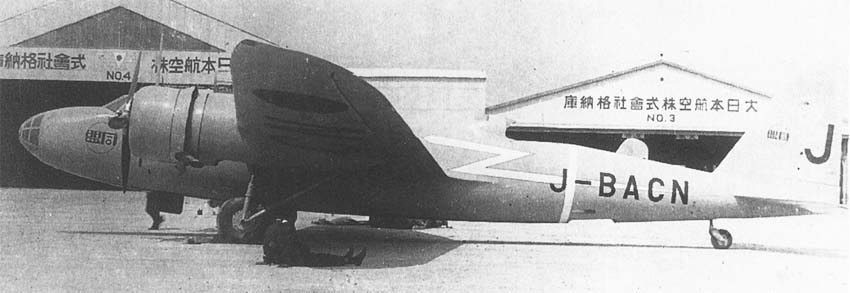
Nakajima Ki-19 Bomber Prototype
The Nakajima Ki-19 was a twin-engine heavy bomber prototype developed for the Imperial Japanese Army Air Service during the 1930s. Designed to replace the ageing Mitsubishi Ki-1 bomber, it competed against the Mitsubishi Ki-21 for a major production contract.
Development began in 1936 under chief designer Ken-ichi Matsumura. The aircraft featured an all-metal airframe, mid-mounted wings, retractable landing gear and an internal bomb bay. Two Nakajima Ha-5 radial engines provided approximately 890 horsepower each.
The Ki-19 carried five crew members and three defensive 7.7 mm machine guns. It could carry a maximum bomb load of 1,000 kilograms, reach 352 km/h and had a range of 4,000 kilometres.
During 1937, the Japanese Army evaluated the Ki-19 alongside Mitsubishi’s Ki-21. Although the Nakajima aircraft demonstrated good stability during bombing trials, the Army preferred Mitsubishi’s design. Further testing involved exchanging engines between the competing aircraft.
As a result, the Mitsubishi Ki-21 entered production as the Army Type 97 Heavy Bomber, while Nakajima abandoned further Ki-19 development.
Only four Ki-19 prototypes were constructed. In 1939, Nakajima converted one into the N-19 mail plane, which was often referred to as the long-range communications aircraft. The Domei Press Agency subsequently operated this aircraft as Domei No. 2, giving the unsuccessful bomber design a brief civilian career.


