
Broken Hill New South Wales
Broken Hill, located in the far west of New South Wales, is one of Australia’s most iconic mining cities. Known as the “Silver City,” it is surrounded by vast outback landscapes and has played a central role in the nation’s economic and industrial development. Established in the 1880s following the discovery of rich silver, lead, and zinc deposits, Broken Hill became the birthplace of both major mining operations and the union movement. Today, the city is recognised for its heritage, culture, and resilience, and it continues to thrive as both a mining hub and a vibrant outback community.

Origins and Discovery
The story of Broken Hill began in 1883, when a boundary rider named Charles Rasp discovered mineralisation while working at a remote sheep station. His claim, along with those of fellow syndicate members, developed into the Broken Hill Proprietary Company (BHP), which would go on to become one of the world’s largest mining corporations.
The ore body, a long, jagged outcrop that resembled a “broken hill,” proved to be one of the richest deposits of silver, lead, and zinc ever found. Mining quickly transformed the remote station country into a booming settlement.
Growth of the City
By the late 1880s, Broken Hill was a thriving frontier town with thousands of miners, families, and entrepreneurs flocking to the district. The population grew rapidly, and the city developed services, schools, churches, and cultural institutions.
The challenges of life were immense: the arid climate, isolation, and harsh working conditions tested residents’ endurance. Yet Broken Hill’s people forged a strong sense of identity, built around resilience, solidarity, and innovation.
Mining and Industry
Mining has always been at the heart of Broken Hill’s existence. The lode, seven kilometres long, sustained continuous extraction for over a century. The ore provided the foundation for Australia’s industrial growth, feeding smelters and creating wealth that reached far beyond the outback.
BHP eventually shifted focus away from Broken Hill, but other companies continued operations. Even today, mining remains central to the city’s economy, with modern techniques allowing continued extraction of valuable minerals.
The Union Movement
Broken Hill also holds a special place in Australia’s labour history. The harsh conditions underground, combined with frequent industrial disputes, led to the formation of strong miners’ unions. Strikes in the 1890s and early 20th century were pivotal in shaping national labour laws, improving wages, and advancing workers’ rights.
The city became known as a bastion of unionism, with its struggles contributing to reforms that influenced industrial relations across Australia.
Townscape and Character
Unlike some mining settlements that faded when the ore ran out, Broken Hill developed into a substantial city with enduring institutions and architecture. Its wide streets, stone buildings, and characteristic miners’ cottages give it a distinctive atmosphere. The Line of Lode, a massive mullock heap that runs through the centre of town dominates the skyline, a constant reminder of the city’s origins.
Heritage-listed buildings, from the elegant Palace Hotel to the Trades Hall, reflect both prosperity and community spirit. The city’s layout and surviving fabric make it one of the most complete examples of a historic mining town in Australia.
Art and Culture
In the late 20th century, Broken Hill gained new fame as a centre for art and film. The dramatic outback landscapes and unique light attracted painters such as Pro Hart, Eric Minchin, and Jack Absalom, who became known as the “Brushmen of the Bush.” Their work gave Broken Hill a reputation as one of Australia’s leading regional art centres.
The city has also served as a striking backdrop for films such as Mad Max 2: The Road Warrior and Priscilla, Queen of the Desert. The Silverton Hotel, just outside the city, is an enduring icon of these productions.
Attractions and Heritage
Broken Hill today offers a wealth of attractions for visitors:
- Line of Lode Miners’ Memorial – A poignant tribute to the more than 800 miners who lost their lives in local mines.
- Sulphide Street Railway & Historical Museum – Preserving locomotives, carriages, and community collections.
- Royal Flying Doctor Service Visitor Centre – Telling the story of this vital outback medical service, founded in Broken Hill.
- Pro Hart Gallery – Celebrating the life and work of the city’s most famous artist.
- Living Desert Sculptures – A dramatic collection of stone sculptures set against the outback landscape.
These attractions, combined with heritage walks and historic buildings, create a fantastic experience of industry, art, and community life.
Modern City
Today, Broken Hill has a population of around 17,000 and functions as the service centre for far western New South Wales. Mining continues, though on a smaller scale than in the past, while tourism, film production, and renewable energy projects contribute to the local economy.
The city has embraced its dual identity: both as a proud mining town and as a place of creativity and culture. Festivals, galleries, and community events ensure its spirit remains vibrant, even as it adapts to new challenges.
Significance
Broken Hill is significant for several reasons:
- Mining history: It is one of the world’s greatest silver, lead, and zinc deposits.
- Labour movement: It played a central role in the development of unions and workers’ rights in Australia.
- Cultural identity: Its art, film connections, and distinctive outback character have made it a symbol of resilience and creativity.
- Heritage: The city is recognised on the National Heritage List for its outstanding historic and cultural value.
Line of Lode Memorial
The Line of Lode Miner’s Memorial is a powerful open-air memorial on the crest of Broken Hill’s famous ore seam (“the Line of Lode”), honouring the 800-plus miners who have died in local mines since the 1880s. Their names are etched into glass panels set within tall, rust-red steel walls that form a processional space and lookout over the city. The ages and cause of death is listed for each victim. Some of them were only in their early teens. For the full blog click here.

The Big Bench
The Big Bench sits on the Line of Lode above Broken Hill, in far-west New South Wales beside the Line of Lode Miners’ Memorial and Visitors’ Centre on Federation Way. From the bench, visitors get sweeping views across the city and out to the Barrier Ranges. The location is symbolic, placing the artwork within the very heart of the ore body that shaped Broken Hill’s history. The full blog can be found here.

Junction Mine
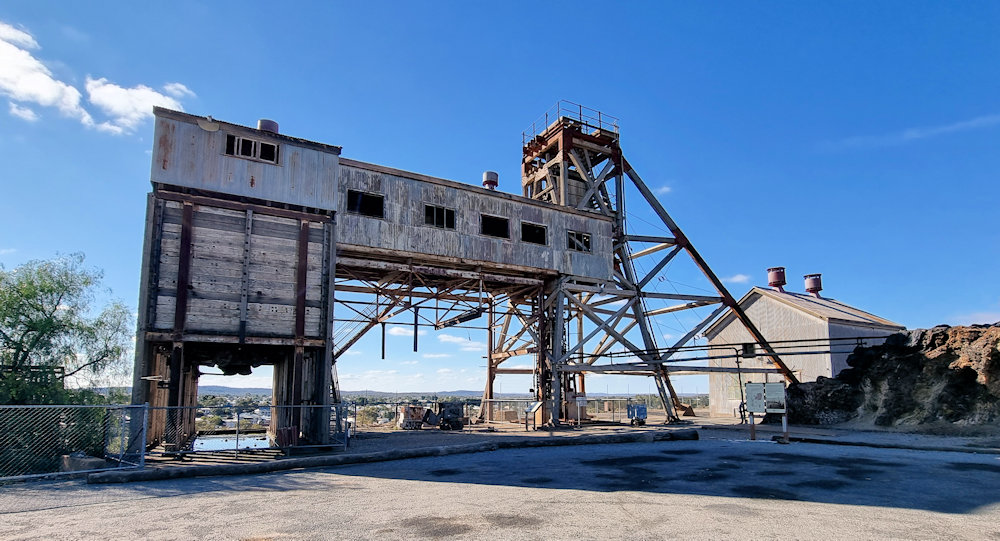
The Junction lease was pegged in 1884 and the Broken Hill Junction Silver Mining Company formed soon after (1886). The mine worked the Line of Lode (silver–lead–zinc) from the 1880s in fits and starts; it was one of the earlier small-to-medium operations on the lode and never grew into one of the very large companies. The site’s most recognisable structure, the wooden headframe over Browne Shaft, was erected in the 1890s and is the oldest surviving timber headframe on the Line of Lode. To find out more about the Junction Mine, click here.

Broken Hill Mining Museum & Whites Mineral Art Gallery
Whites Mineral Art Gallery & Mining Museum is one of Broken Hill’s most distinctive heritage attractions, created by former miner and artist Kevin “Bushy” White. It blends art, history, and personal storytelling, offering visitors an intimate look at Broken Hill’s mining culture. For the full story click here.

Pro Hart Gallery
The Pro Hart Gallery in Broken Hill is one of the cities’ most important cultural landmarks. It celebrates the life and work of local-born artist Kevin Charles “Pro” Hart (1928–2006). Located on Wyman Road, the gallery occupies Hart’s former home and studio, and continues to be run by his family. Read more here.

Sulphide St Rail Museum
Located on the corner of Blende and Bromide Streets, the Sulphide St Rail Museum occupies the historic Sulphide Street Station, once the bustling terminus of the Silverton Tramway Company. The station opened in 1905 and operated until the early 1970s, serving as Broken Hill’s link to the outside world before the introduction of the standard-gauge line. Today, it has been transformed into a museum that not only preserves the railway story of the region but also offers a broader insight into the social, medical, and industrial history of Broken Hill. For the full blog click here.

Royal Flying Doctor Service Museum
The Royal Flying Doctor Service Museum in Broken Hill is located at the city’s airport, about five kilometres from town. It forms part of the Royal Flying Doctor Service South Eastern Section Headquarters, which means visitors can experience the museum alongside the working base, hangar and aircraft that continue to serve remote communities across outback Australia. The museum is easy to find, because signposts directing you once you enter the airport. Additionally, a GAF Nomad aircraft is on display next to the museum carpark. Read more here.

Living Deserts Sculptures
The Living Desert sculptures are a group of 12 large sandstone works on Sundown (Sculpture) Hill inside the Living Desert Reserve north of Broken Hill in New South Wales, Australia. They were created as the result of a month-long sculpture symposium held in 1993 to add a permanent outdoor sculpture element to Broken Hill’s strong visual-arts culture and to help create an iconic attraction for the town. The event was organised and directed by sculptor Lawrence Beck; huge sandstone blocks were brought to the site and carved on location. To find out more, read our full blog here.

Silverton
Silverton New South Wales was established in the 1880s after the discovery of silver deposits in the Barrier Ranges. By the mid-1880s it had boomed into a mining town with a population of several thousand, complete with banks, shops, hotels, a jail, churches, and even a stock exchange. The richer and more extensive ore bodies at Broken Hill soon drew miners and investment away, leading to Silverton’s decline. Many of its buildings were dismantled and moved to Broken Hill, leaving behind a scattering of structures that remain today. Read more about Silverton here.

Daydream Mine
Daydream Mine lies between Broken Hill and Silverton, in the far-west of New South Wales and was one of the earliest silver-lead discoveries in the district. The deposit was found in 1882 by men prospecting in the Barrier Ranges, two years before the famous Broken Hill lode was pegged. A small settlement quickly grew up around the mine, and at its peak in the mid-1880s the township had over 400 residents, including miners, their families, storekeepers and others supporting the operations. There were hotels, shops, a post office, and even a public school. Read more about our visit to Daydream Mine here.

Historic Buildings
The wealth generated by mining is reflected in the any gras buildings located throughout Broken Hill. Some of the ones we saw are shown below.


Kintore Headframe
If you don’t get to any of the preserved headframes, Kintore Headframe is in the centre of town. It’s easy to get to and has a big car park.

Statues and Memorials
Walking around the town we came across a few statues. We found the Digger outside the RSL, while nearby is “The Bomber” on the World War One Memorial.


Other Places to Visit in New South Wales
To see what else there is to do in New South Wales, click here.

Leave a Reply