
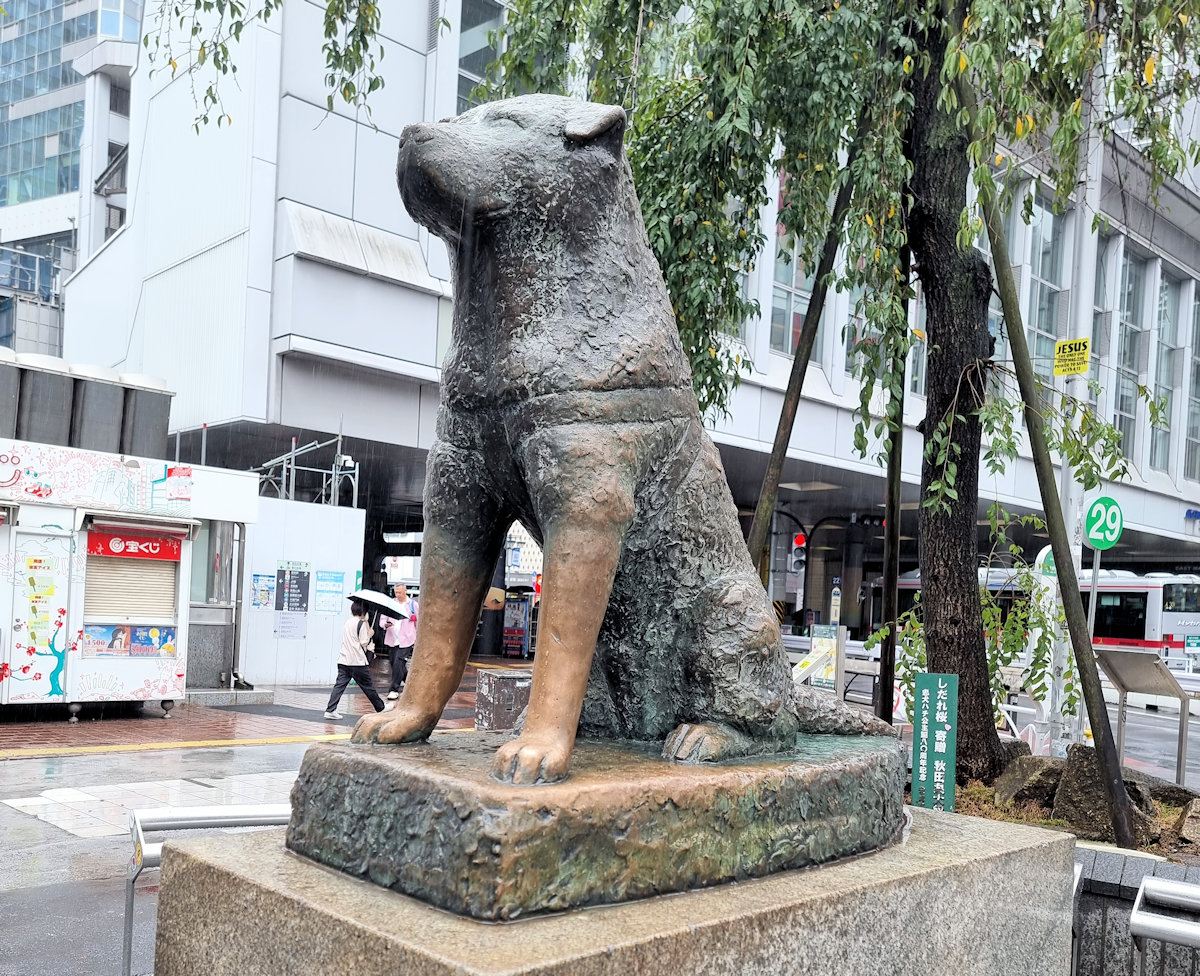
Hachikō Statue Shibuya Tokyo
The Hachikō Statue, located outside Shibuya Station in Tokyo, commemorates one of Japan’s most famous stories of loyalty and devotion. The bronze statue depicts Hachikō, an Akita dog who became nationally recognised for waiting nearly ten years for his deceased owner to return from work.
Hachikō was born in November 1923 in Ōdate, Akita Prefecture. In 1924, he was adopted by Hidesaburō Ueno, a professor at Tokyo Imperial University. The professor travelled to work by train, and Hachikō developed a routine of accompanying him to Shibuya Station and returning in the afternoon to greet him.
However, in May 1925, Professor Ueno died suddenly from a cerebral haemorrhage while at work. Unaware that his owner would never return, Hachikō continued visiting Shibuya Station, waiting for the familiar arrival of his master.
For almost ten years, Hachikō maintained this routine, attracting the attention of railway employees, commuters and local residents. His story gained national recognition following a newspaper article published in 1932, transforming him into a symbol of loyalty throughout Japan.
In April 1934, a bronze statue created by sculptor Teru Andō was unveiled outside Shibuya Station. Remarkably, Hachikō was still alive and attended the unveiling ceremony. He died on 8 March 1935.
During the Second World War, authorities removed the original statue as part of Japan’s wartime metal collection programme. In 1948, a replacement statue, created by Takeshi Andō, the original sculptor’s son, was unveiled. This is the statue visitors see today.
Today, the Hachikō Statue is one of Shibuya’s best-known landmarks and a popular meeting place. Situated near the famous Shibuya Scramble Crossing, it attracts numerous visitors wanting to photograph the memorial.


Leave a Reply