
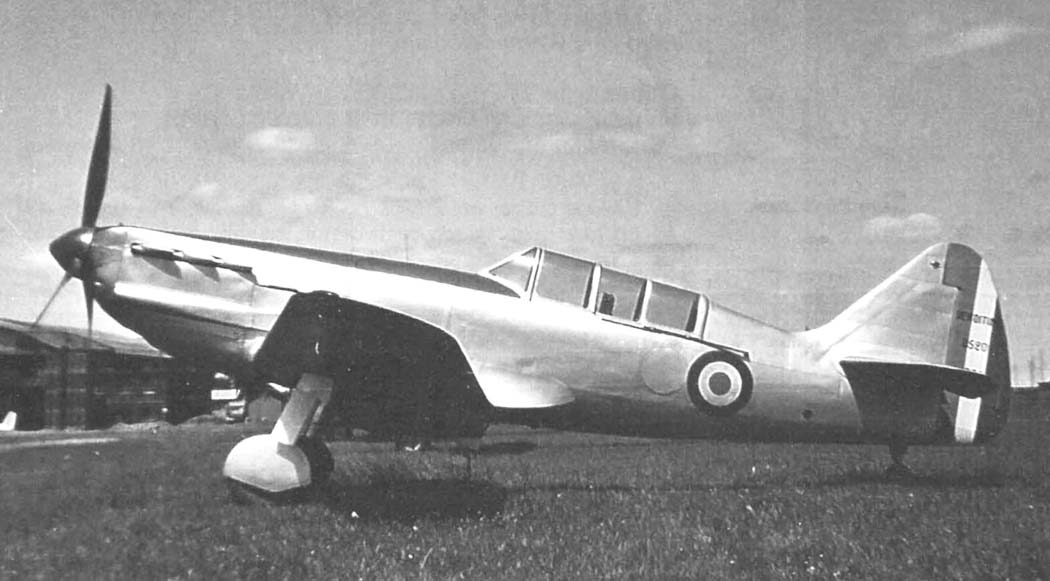
Dewoitine D.520 DC
The Dewoitine D.520 DC represents a less frequently discussed branch of the Dewoitine design lineage. The suffix DC, variously interpreted in period notes as “Double Commande,” identified a dual control conversion of the standard D.520 airframe intended for pilot training and familiarisation duties.
Structural Modifications and Configuration
The core design challenge of the D.520 DC lay in integrating a second cockpit without compromising weight distribution, structural integrity, or aerodynamic performance. Engineers reconfigured the forward fuselage and canopy arrangement to house the instructor’s cockpit in a tandem position aft of the pilot. This required repositioning the fuel system elements, adjusting internal bulkheads, and modifying the dorsal fuselage line to preserve airflow continuity.
The canopy became longer and more segmented, reflecting the additional glazing requirement. Control linkages were duplicated to permit full operation of primary flight surfaces from the instructor’s position. Instrumentation in the aft cockpit was functional but simplified relative to the pilot’s station. Armament was typically omitted from DC conversions, as the role centred on training rather than combat evaluation. Weight penalties were inevitable, and performance suffered correspondingly, though the airframe retained acceptable agility for instruction and familiarisation flights.
Production, Employment, and Operational Context
The precise number of D.520 DC conversions remains subject to debate due to gaps in surviving records, but specialist literature cites a small series constructed during 1942 and 1943 under Vichy supervision. These aircraft served primarily in pilot training and conversion units in unoccupied territory and in North Africa.
Following the Allied landings in North Africa and the alignment of Vichy forces in the region with the Allies, surviving D.520 DC aircraft continued in service alongside conventional D.520 fighters. However, the type remained numerically marginal, and no broader production was attempted. After the war, remaining examples appeared sporadically in French flying schools, though they were quickly superseded by purpose built two seat trainers and more modern fighter conversion paths.


References
Brun, R. (1991). Les avions Dewoitine 1920 1940. Docavia.
Cuny, J. (1979). Les chasseurs français 1918 1940. Docavia.
Danel, R. & Cuny, J. (1967). Le Dewoitine D.520. Docavia.
Service Historique de la Défense, Vincennes. Documents de l’Aéronautique, dossiers D.520.