
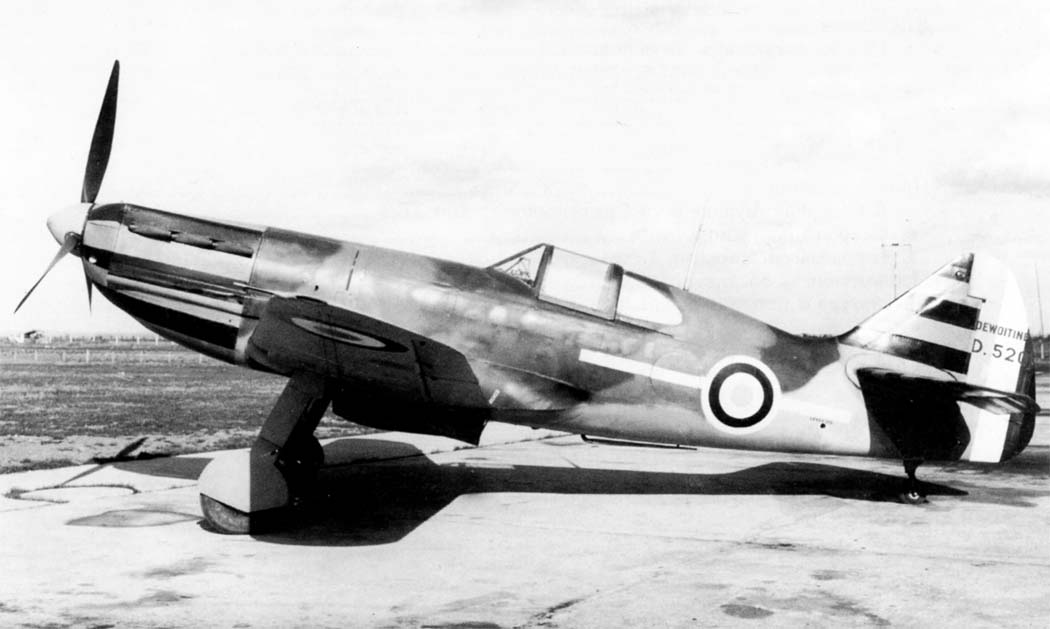
Dewoitine D.520 in Vichy French Service
In April 1941, the German Armistice Commission allowed Vichy authorities to resume domestic aircraft production, provided that France later manufactured 2,000 German-designed aircraft for delivery to Germany. Under this arrangement, 550 Dewoitine D.520 fighters were ordered to replace all other single-seat types, though they were prohibited from basing such aircraft in metropolitan France. Planned allocations included 442 machines for 17 Groupes, three naval escadrilles with 37 aircraft each, and three training units. While these aircraft were to match earlier production standards, examples from serial 543 onward employed the improved 12Y-49 engine; however, more powerful 12Y51 and 12Z units were barred.
D.520s saw extensive action under Vichy control during the Syria–Lebanon campaign. Units such as GC III/6, II/3, and naval escadrille 1AC deployed after long ferry flights from France via Italy to Rhodes and finally Syria—an arduous journey for a 1940-era interceptor. Of 168 French aircraft dispatched, 155 arrived, though limited logistics and spares constrained sortie rates. First combat occurred on 8 June 1941 when D.520s downed three British Fulmars for the loss of one Dewoitine. Over subsequent days the type flew escort missions and achieved further kills against Hurricanes.
Vichy forces flew 266 missions during the campaign, 99 by D.520s. On 10 July, five Dewoitines engaged RAF Blenheims and their Australian Tomahawk escorts, claiming three bombers but losing at least four fighters. The following day a D.520 downed a Tomahawk before itself being destroyed. Initial Vichy advantages eroded as Allied air attacks destroyed aircraft on the ground due to poor infrastructure and limited air defence. By campaign’s end, Vichy lost 179 of roughly 289 aircraft committed; French fighter losses totalled 26 in air combat and 45 to strafing and bombing, while the Allies lost 41 aircraft, 27 to French fighters.
During Operation Torch, D.520s again opposed Allied forces in North Africa, though many were destroyed on the ground and overall impact was limited.


