
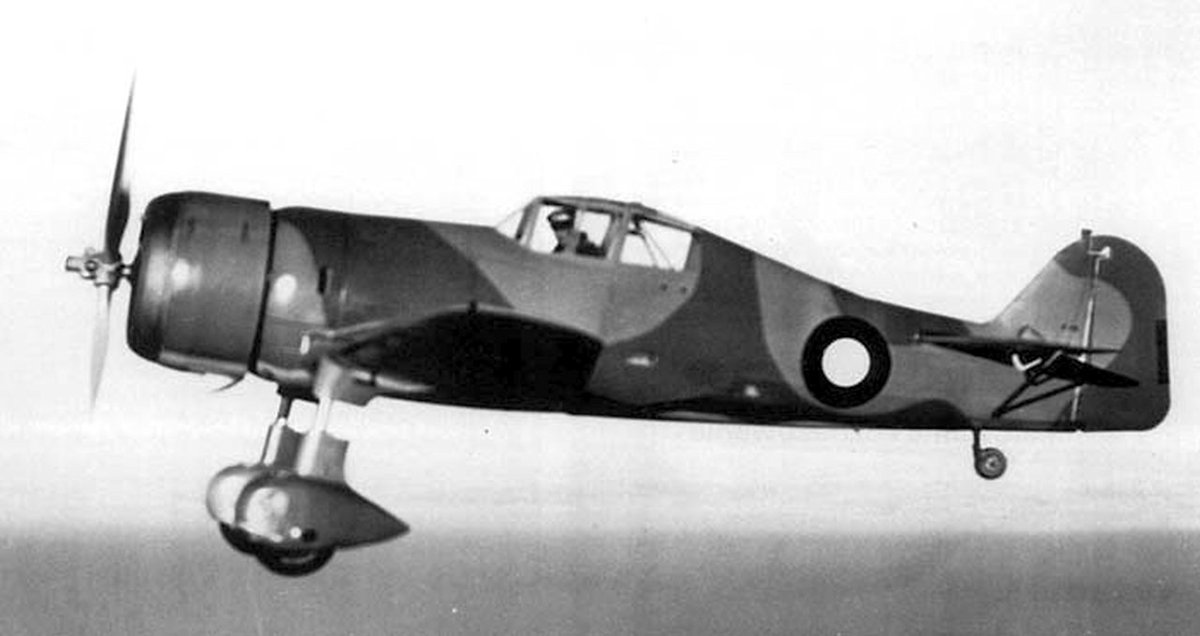
Fokker D.XXI in Danish Service
The Fokker D.XXI was a Dutch-designed single-seat fighter aircraft operated by the Royal Danish Army Air Corps (Hærens Flyvertropper) shortly before the Second World War. Designed by Erich Schatzki, the aircraft first flew in March 1936 and featured a robust construction, enclosed cockpit and fixed undercarriage.
Denmark ordered two Fokker-built aircraft, designated J-41 and J-42, followed by ten additional fighters manufactured under licence at the Danish Army Aircraft Factory in Copenhagen. These aircraft entered service during the late 1930s, equipping the Danish fighter force based at Værløse Airfield near Copenhagen.
The Danish D.XXI differed from its Dutch counterpart in armament. It carried two 8 mm machine guns and two 20 mm Madsen cannons mounted beneath the wings, providing considerable firepower against enemy bombers. The licence-built aircraft were powered by Bristol Mercury radial engines.
On 9 April 1940, Germany invaded Denmark. Luftwaffe Messerschmitt Bf 109 fighters attacked Værløse Airfield early that morning, destroying or damaging numerous Danish aircraft, including several D.XXIs.
The Danish fighters never had an opportunity to engage the invading aircraft in combat. Denmark surrendered within hours, bringing the D.XXI’s brief Danish operational career to an end. Surviving aircraft were dismantled and stored, only to be destroyed by the Danish resistance later. Some were captured by German forces and used as trainers by the Luftwaffe.


