
Mungo National Park
Mungo National Park sits within the remote Willandra Lakes Region of south-western New South Wales. It forms part of the Willandra Lakes World Heritage Area, which preserves a chain of ancient dry lakebeds that reflect more than 40,000 years of human history. The park spans over 110,000 hectares and lies about 110 kilometres north-east of Mildura. Moreover, its eroded lunettes and wide plains create a landscape that reveals one of the earliest known records of human presence in Australia. Archaeologists uncovered the remains known as Mungo Lady and Mungo Man here, and these finds reshaped the understanding of early settlement on the continent. They also confirmed a long and ongoing relationship between people and Country.
Changing Environments
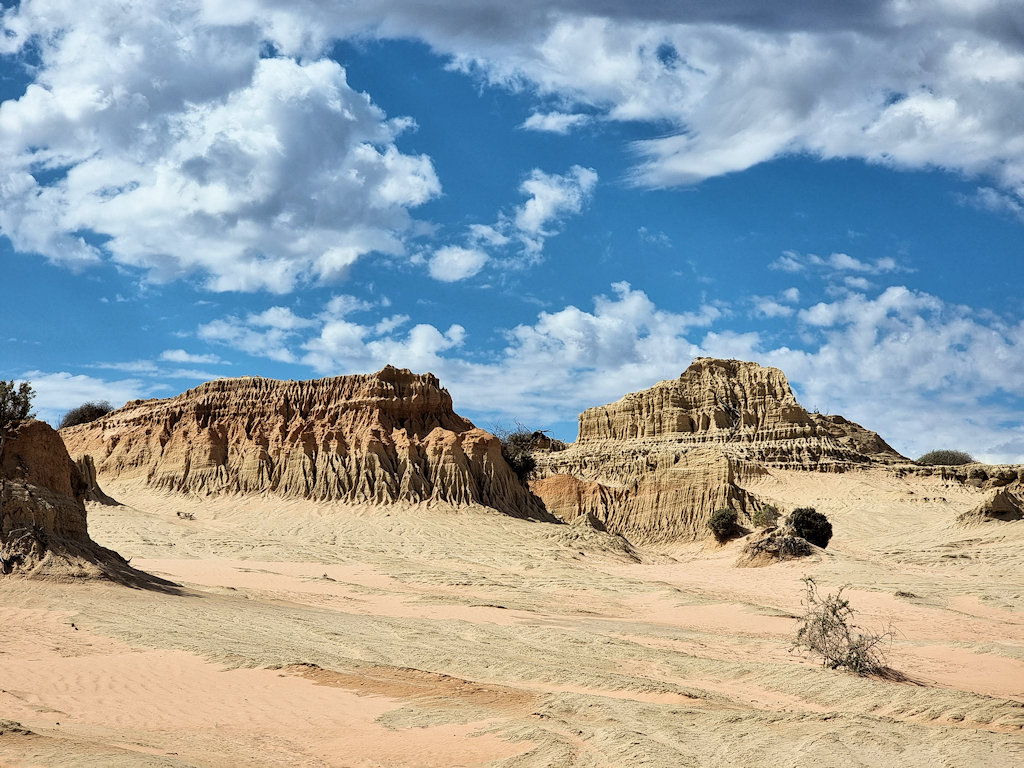
The environment of Mungo shifted dramatically over thousands of years. Once, the Willandra Lakes held fresh water and supported large communities and abundant wildlife. As the climate changed, the lakes dried, and winds carved the lunette called the Walls of China along the edge of Lake Mungo. Today, the dunes and ridges hold traces of ancient life, including hearths, tools, and footprints. Consequently, the landscape offers a rare record of cultural and environmental change.
Cultural Heritage
Mungo remains a place of deep significance to the Paakantji, Ngyiampaa, and Mutthi Mutthi peoples. Their stories, knowledge, and custodianship continue to guide care for the land. Joint management between Traditional Owners and the NSW National Parks and Wildlife Service ensures that cultural values and environmental protection shape all decisions. Furthermore, this collaboration supports the safeguarding of sacred sites across the dunes and plains.
Walls of China
The Walls of China is the most recognisable feature of the park. Wind and water shaped its crescent dunes into towers, ridges, and fragile pinnacles. Within these layers lie evidence of early human activity, including tools, bones, and the remains of campfires. Because of the scientific and cultural importance of the lunette, access is tightly controlled. Visitors may only enter the main area with an authorised guide. Guided tours leave from the Mungo Visitor Centre and explain both the significance of the formations and the traditions connected to them. Several tour operators also collect visitors from Balranald and Mildura, which offers a convenient option for those who prefer not to drive on unsealed roads.
Access and Travel
Travelling to Mungo requires preparation, since it sits in a remote semi-arid region. Although the park can be reached by standard vehicles in dry conditions, four-wheel drive offers greater safety and comfort. Rain quickly turns clay roads into surfaces that are difficult to pass. Therefore, travellers should check road conditions and carry sufficient fuel, water, and supplies. Fuel is not available within the park, and mobile reception is limited. Entry is through the Mungo Visitor Centre, where visitors can obtain maps, permits, and information on geology, wildlife, and culture. Self-guided drives, including the 70-kilometre Mungo Loop Track, allow exploration of dunes, lakebeds, and lookouts while remaining on designated routes.

Visiting Mungo National Park
We visited Lake Mungo in September 2025, using one of the local tour operators. We considered driving ourselves and meeting a guide as Mungo Lodge, but rain was forecast and we were concerned about the road’s conditions. Although the rain stayed a way for us, it rained the following day, and the park was closed.
Our guide picked us up in central Mildura along with several others on the same trip. Roughly 90 minutes later we reached the Mungo Visitors Centre and the starting of our visit.

Mungo Visitors Centre
After morning tea provided by our guide, we explored the visitors centre and surrounds. Containing some excellent displays of an aboriginal artefacts and information on the area’s history, this was a great primer on what to expect during our tour.
There is a life-sized model of a diprotodon, a relative of the wombat and koala that went extinct over 40,000 years ago.


Wool Shed
Located next to the Visitor Centre is the Mungo Woolshed. Beautifully preserved, it is one of the few reminders that sheep were grazed here before the area became a National Park. Built for the Gol Gol Station around 1878, it sometimes saw over 29,000 sheep shorn there in a single year. It was constructed by Chinese labourers using locally sourced termite-resistant Murray pine logs. It was these labourers who name the eroded lunette landscape the Walls of China.
Inside the shearing stands, pens and sorting tables are still present, preserved now that the sheep station is part of the National Park.


The Walls of China
This is the area that the park is famous for. Without a licensed guide, little of the famous lunette landscape and Walls of China can be seen. Only a qualified guide can proceed past the observation platform and escort visitors to the fragile landscape.
As the anticipated highlight of the tour, it did not disappoint. The landscape is amazing, and photos do not do it justice. Our guide led us to exposed hearths that has been buried thousands of years ago but were now exposed be erosion. We saw the skeleton of a burrowing bettong (similar to the one on the Visitors’ Centre) that had been killed when its burrow collapsed.
Walking through the lunette landscape we were reminded of how fragile it is. The exposed sand was very friable and walking on the wrong areas would cause untold damage.


What Did We Think?
This was an amazing visit. The guide provided a huge amount of information on the area’s history including aboriginal and colonial heritage. Being able to walk through this landscape was a fantastic experience and is highly recommended.
Other Places to Visit in New South Wales
To see what else there is to do in New South Wales, click here.
Our photos are available for purchase on


Leave a Reply