
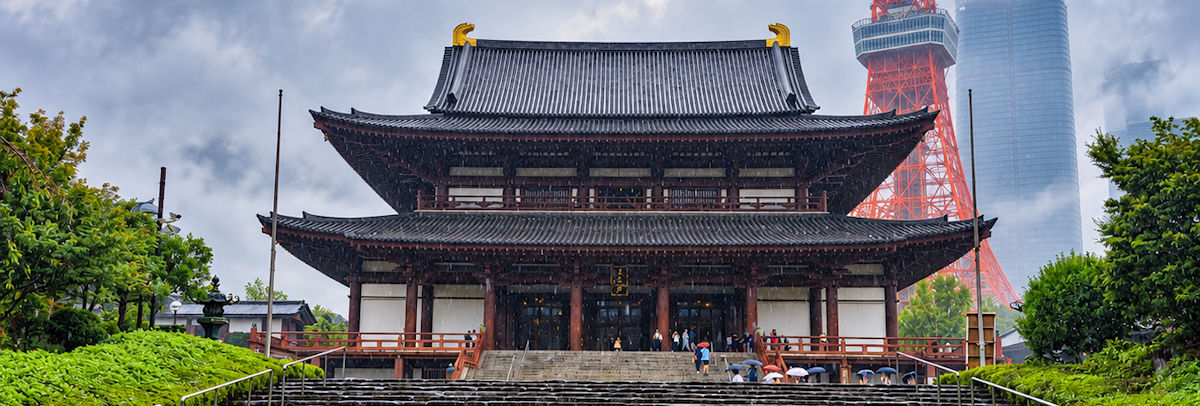
Zōjō-ji Temple Tokyo – History, Highlights & How to Get There
Located in Tokyo’s Minato district, near Tokyo Tower, Zōjō-ji Temple is one of the city’s most historically significant Buddhist temples. Founded in 1393, it belongs to the Jōdo (Pure Land) sect of Japanese Buddhism.
In 1598, the temple moved to its present location under the patronage of Tokugawa Ieyasu, founder of the Tokugawa shogunate. Subsequently, it became the family temple of the Tokugawa clan, which ruled Japan from 1603 to 1867. During the Edo period, Zōjō-ji developed into a major religious centre, accommodating thousands of monks and numerous subsidiary temples.
The temple grounds contain the mausoleums of six Tokugawa shoguns, along with the graves of several family members. Although fires and bombing during the Second World War destroyed much of the original complex, the impressive Sangedatsumon Gate, built in 1622, survived. This gate is currently (2026) undergoing long term restoration and is covered by scaffholding.
Another notable feature is the collection of small stone Jizō statues, often decorated with knitted caps, clothing and colourful pinwheels. These statues commemorate children who died young, including those lost through miscarriage or stillbirth.
How to Get There
Zōjō-ji Temple is located in Minato, central Tokyo, close to Tokyo Tower and Shiba Park. It is easily accessible by public transport, with several railway and subway stations within walking distance. We had just visited the Tokyo Tower which was only a 5-minute walk away.


To find out more about Japan, see our blogs here
Leave a Reply