
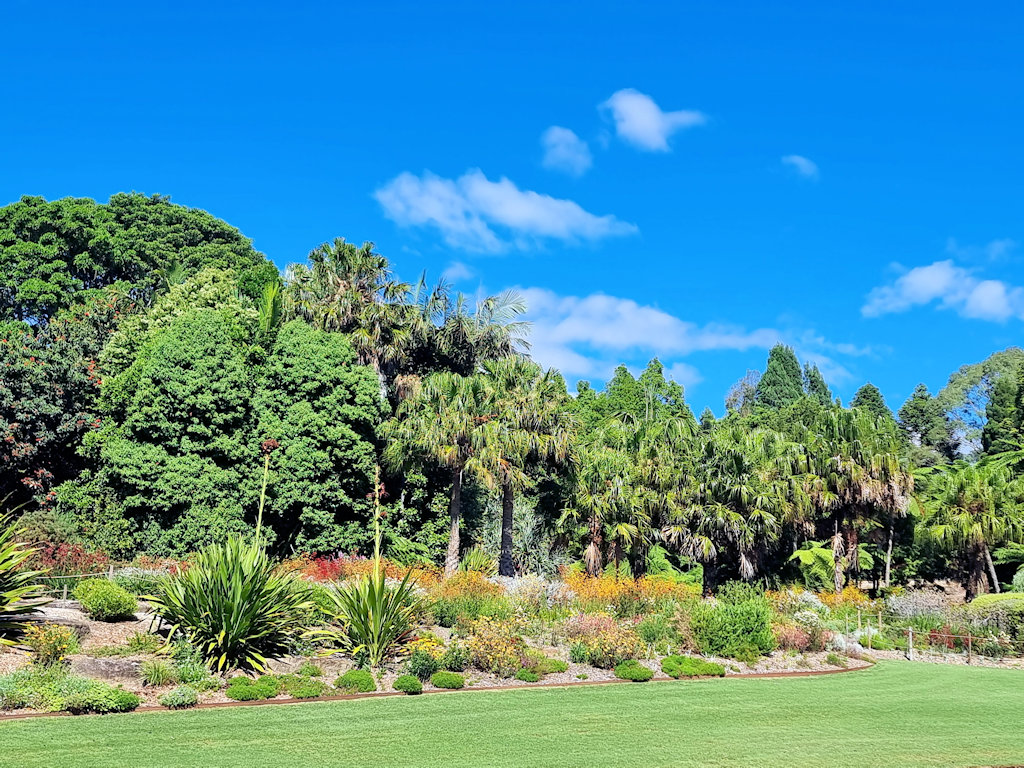
Australian Botanic Garden Mount Annan
Located around an hour’s drive southwest of Sydney, the Australian Botanic Garden Mount Annan is a major centre for native plant conservation. Not only does the site support scientific goals but it is also designed for recreational use. Covering over 400 hectares, the gardens have extensive living collections of Australian flora on display.
The various sections of the gardens are connected by sealed roads, making access easy. Additionally, parking bays along the roads provide easy parking to stop and explore the different areas. At each major display carparks, toilets and picnic shelters provide places to stop and enjoy the gardens.
Variety and Structure of Plant Collections
The plant collections present a large sample of Australia’s botanical diversity. Sections reflect distinct regions, such as dry inland zones, coastal heaths and temperate woodlands.
The Cumberland Plain Woodland area is particularly important. This region once covered large parts of western Sydney, but most has been cleared for farmland and development. The remnant preserved here provides researchers with the opportunity to re-establish it elsewhere.
Research Programs and Scientific Work
Research sits at the centre of the garden’s mission. Teams examine plant adaptation, restoration methods and environmental resilience. Since the site provides large field areas, researchers test techniques that support habitat repair. These studies inform land management practices across New South Wales. Furthermore, the garden collaborates with universities to investigate plant responses to soil change, temperature variation and water stress. These collaborations strengthen national understanding of native species and their ecological value.
The garden also leads projects on rare and threatened plants. Staff collect data on growth rates, reproductive success and habitat needs. Therefore, each collection supports broader conservation goals. Researchers track how species respond to controlled burns and altered planting densities, and these findings guide restoration strategies. While some work takes place in laboratories, many studies use open plots that simulate natural conditions. This approach ensures strong relevance to real landscapes.
Community science forms another part of the research program. Volunteers assist staff by recording flowering times, monitoring insect activity and supporting restoration sites. Consequently, the public gains insight into the scientific process. Workshops introduce participants to field methods and explain how data contributes to national biodiversity records. Although research demands precision, staff also ensure visitors understand its value in securing plant futures. Through collaborative work, the garden strengthens ties between science and community interests.
The Seed Bank and Its Conservation Role
The Australian PlantBank sits within the garden and serves as a major conservation hub. Its purpose centres on long-term seed storage, research and genetic preservation. Staff collect seeds from across Australia to secure material for future restoration. Since many species face habitat loss, the seed bank provides a safeguard against further decline. Seeds receive careful processing, then move into climate-controlled storage rooms. These rooms maintain stable conditions that extend the seed life.
Although storage remains essential, the facility supports wider scientific investigations. Researchers study seed longevity, germination cues and responses to temperature change. Consequently, new knowledge improves breeding and restoration programs. The seed bank also works closely with land managers to supply material for recovery projects. Many threatened species require detailed care, and the facility provides that support through both testing and cultivation. Furthermore, its laboratories allow staff to examine seed structure and viability with advanced tools.
The PlantBank welcomes visitors, and its design encourages public engagement with conservation science. Interpretation panels explain each stage of seed processing, and guided tours reveal the complexity of long-term storage. Students often visit to learn about biodiversity loss and the importance of genetic security. Through these educational efforts, the facility helps people understand why seed conservation matters. The seed bank therefore extends the garden’s mission by safeguarding the future of Australia’s flora and linking scientific rigour with public awareness.
Visiting the Australian Botanic Garden Mount Annan
We drove to Mount Annan, arriving early in the morning. Driving around the site was easy, especially as the roads are mostly one-way forming several loops. Throughout the gardens, parking spots are provided along the roads and in dedicated car parks. This made it very easy to stop where we wanted, to look at the plants on display.
Different gardens are dedicated to specific types of Australian plants such as wattle, banksia and bottlebrush. Each of these areas not only has a carpark but also have toilets and picnic shelters. These areas also have large, grassed areas so that kids can run around and play.
After walking through the gardens, we went to the Visitor Centre and Café for lunch. Here you will find staff who can provide maps and details on what to see in the Gardens. We had already booked a tour of the Seed Bank, but the staff here can do that for you too.


National Herbarium of New South Wales and Australian Plant Bank
The Herbarium and Plant Bank are where the research and other scientific work of the gardens take place. If you don’t want to do a tour, large information panels outside describe the work that they undertake. We really enjoyed the tour which took around 90 minutes. We were able to see how the seeds were gathered, studied and preserved. Most Australian species are held in a seed bank, to ensure their survival.
Additionally, displays show the past work of the Herbarium, including samples, journals and Joseph Banks’ collection cabinet from his voyage of the Endeavour.


Stolen Generations Memorial
Not far from the Herbarium is a walking track that takes you to the Stolen Generations Memorial. Initially we missed the sign at the start but parked in the Herbarium carpark and walked from there. The track takes you along a boardwalk to the memorial and commemorative stones with memories of the affected people written on them.


Other Places to Visit in New South Wales
To see what else there is to do in New South Wales, click here.
Our photos are available for purchase on


Leave a Reply