
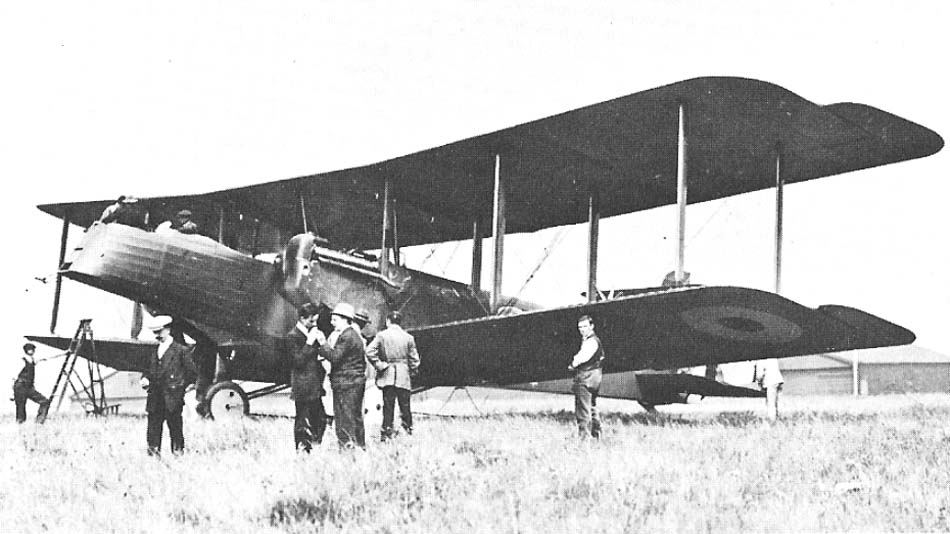
Armstrong Whitworth Sinaia Biplane Bomber
The Armstrong Whitworth Sinaia was a British twin-engined biplane bomber developed immediately after the First World War. Originally designed by Siddeley-Deasy, the aircraft became an Armstrong Whitworth project following the companies’ reorganisation.
Designed by John Lloyd and F. M. Green, the Sinaia aimed to meet an Air Ministry requirement for a day bomber. Its most unusual feature was its defensive armament arrangement.
Two gunners occupied elevated positions behind the wings, mounted on extensions of the engine nacelles. This arrangement provided wide defensive fields of fire on either side of the aircraft. A third gunner occupied a position in the nose.
The Sinaia had equal-span biplane wings, a biplane tail assembly and three rudders. Two 500-horsepower Siddeley Tiger water-cooled V12 engines provided power. The aircraft had a wingspan of 26.47 metres and a crew of four.
The prototype, serial J6858, made its first flight on 25 June 1921. However, persistent engine reliability problems disrupted testing. Structural concerns also emerged during trials later that year.
Although the Air Ministry ordered two aircraft, only one was completed. The prototype underwent evaluation at Farnborough but never entered operational service. Its development ended without production, and the aircraft was eventually dismantled during the mid-1920s.


