
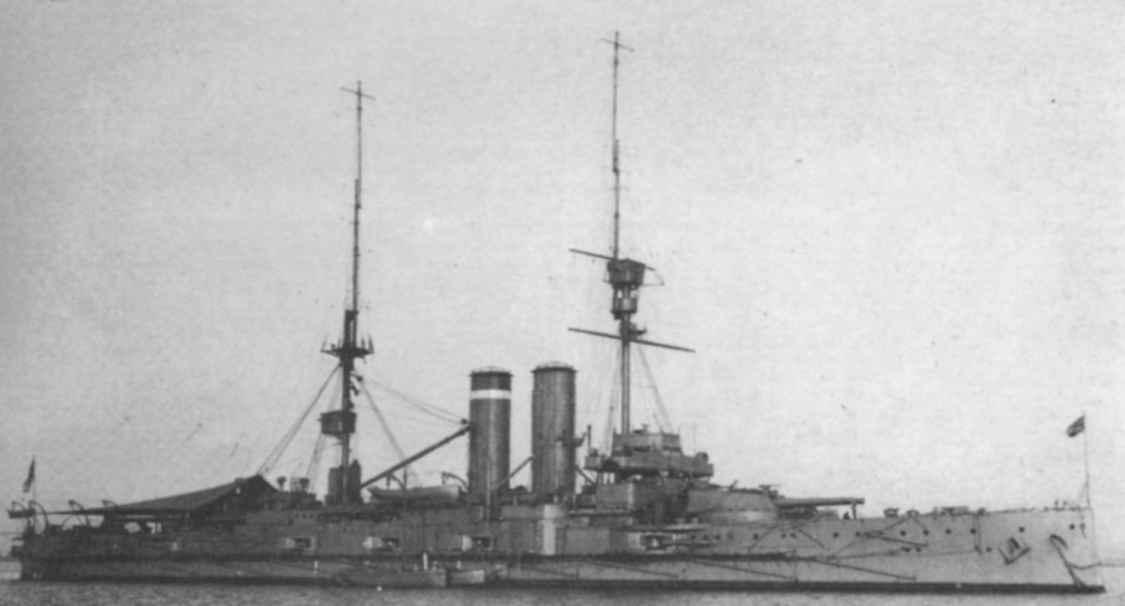
HMS Britannia (1904) – King Edward VII-Class Battleship
HMS Britannia was a King Edward VII-class pre-dreadnought battleship of the Royal Navy. Built at Portsmouth Dockyard, she was laid down on 4 February 1904, launched on 10 December 1904 and commissioned in September 1906. She was one of eight ships in the class, which represented an improvement in British battleship design before the introduction of HMS Dreadnought in 1906.
Displacing approximately 16,000 tons, Britannia was armed with four 12-inch guns in two twin turrets, four 9.2-inch guns and ten 6-inch guns. Powered by triple-expansion steam engines driving two propellers, she could reach approximately 18.5 knots.
Following commissioning, Britannia served with the Atlantic Fleet before transferring to the Channel Fleet in 1907 and the Home Fleet in 1909. In 1912, she joined the 3rd Battle Squadron and subsequently participated in international naval operations during the First Balkan War.
At the outbreak of the First World War in August 1914, Britannia was assigned to the Grand Fleet. During 1916, she served in the Mediterranean and Adriatic before transferring to Atlantic patrol and convoy escort duties in 1917.
On 9 November 1918, while operating off Cape Trafalgar, Britannia was torpedoed by the German submarine UB-50. The attack caused extensive flooding and a fire in an ammunition magazine. Although most of her crew escaped, 50 men were killed and approximately 80 injured.
Britannia sank just two days before the Armistice, becoming one of the last British warships lost during the First World War.


