
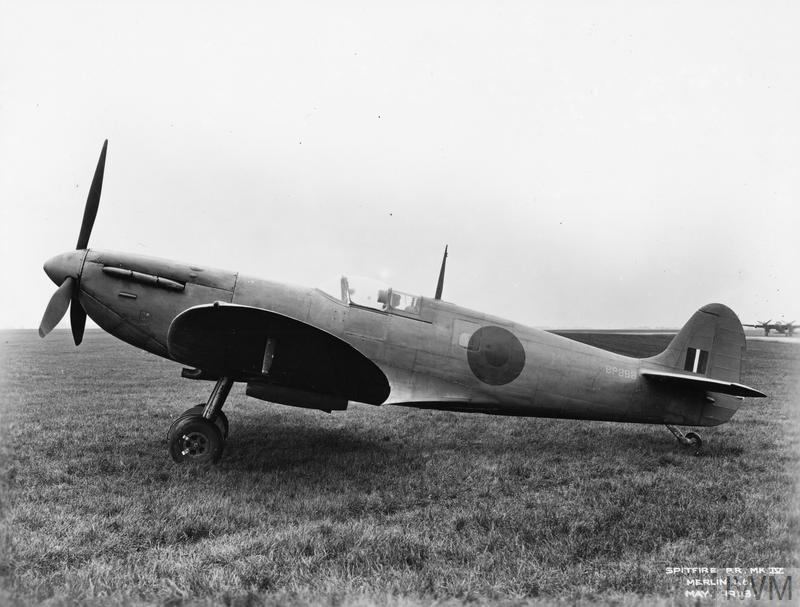
Supermarine Spitfire PR Mk IV
The Supermarine Spitfire PR Mk IV, originally designated the Spitfire Mk I PR Type D, was a photographic reconnaissance aircraft development of the Spitfire. Designed for long-range missions, it carried cameras instead of armament, with additional fuel tanks installed in its wings to increase operational range. The aircraft featured modified canopies incorporating large lateral teardrop-shaped blisters, providing pilots with a much clearer view to the rear and below. Powered by a Rolls-Royce Merlin engine, the PR Mk IV entered service in 1941. A total of 229 Type Ds were built.
The Soviet Union acquired several Supermarine Spitfire PR Mk IV reconnaissance aircraft during the Second World War. In September 1942, three RAF aircraft arrived at Vaenga airfield in northern Russia to support Arctic convoy PQ 18. British pilots initially operated them, photographing German naval forces and installations in occupied Norway. Following these operations, the aircraft were transferred to Soviet control, serving with the Northern Fleet’s aviation units. Additional PR Mk IV aircraft arrived during 1943 and 1944, expanding Soviet reconnaissance capabilities. These unarmed, long-range Spitfires provided valuable intelligence on German naval movements and military activity across the Arctic region.
Royal Air Force Operated Spitfire PR Mk IVs


Soviet Operated Spitfire PR Mk IVs

