
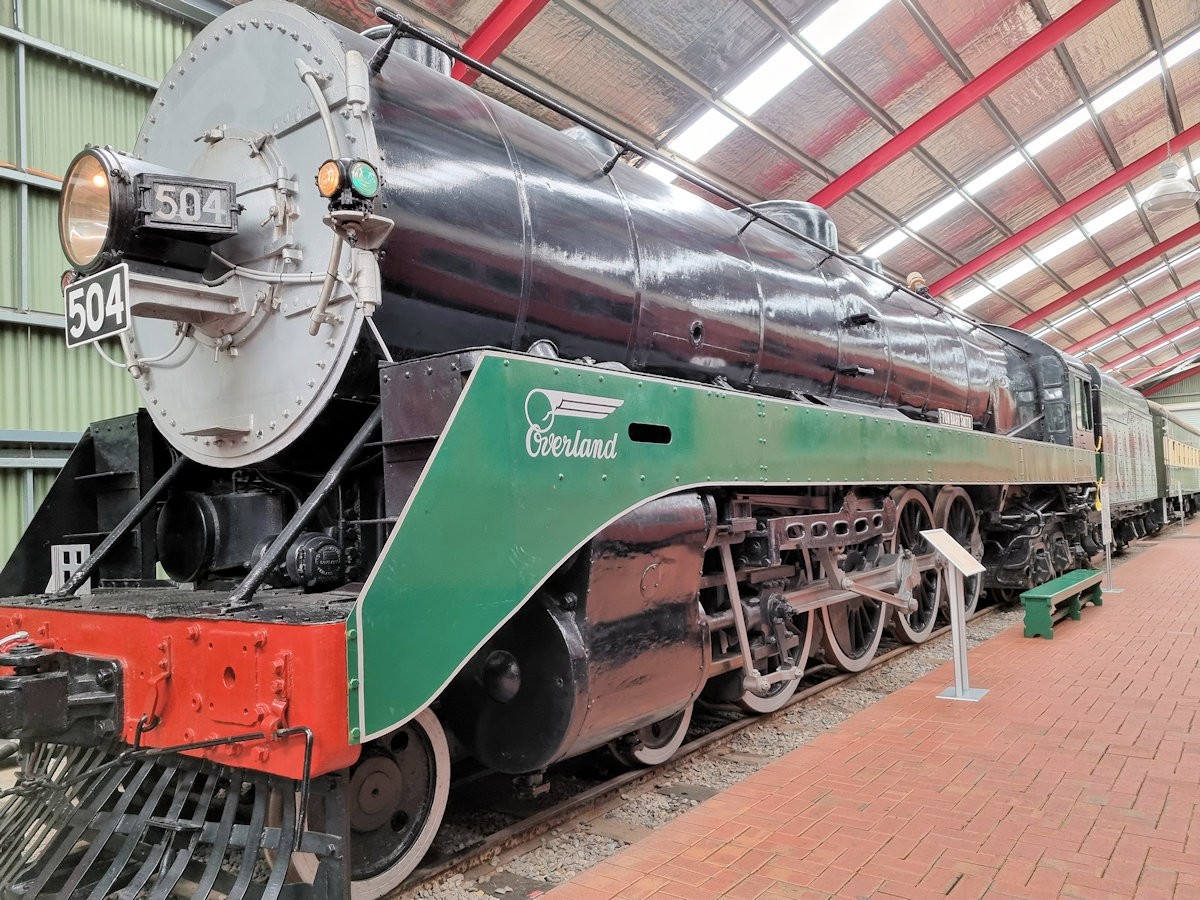
The National Rail Museum at Port Adelaide is a major railway heritage institution with a collection of locomotives, rolling stock, and archival material. The collection covers more than a century of transport development in South Australia and beyond. The museum opened in 1963 as the Port Dock Station Railway Museum, and it has evolved into a comprehensive educational and tourist destination.
Location and Setting
The museum is located at Lipson Street in Port Adelaide, roughly fourteen kilometres northwest of central Adelaide. The surrounding district retains maritime and industrial character, which complements the transport theme. Additionally, the precinct includes other cultural venues such as the South Australian Maritime Museum and South Australian Aviation Museum. The site is compact yet well arranged, and it allows rolling stock to be displayed both indoors and outdoors. Port Adelaide is an accessible suburb with well-preserved nineteenth century buildings.
How to Get There
The museum is reachable by car, rail, and bus. Visitors traveling from the Adelaide CBD can take Outer Harbor line trains to Port Adelaide station. From there it is a short walk to the museum’s entrance. Alternatively, bus services operate along several routes into the centre of Port Adelaide. Moreover, driving is straightforward with access from major arterial routes such as Port Road and the Port River Expressway. Parking is available near Lipson Street.
The Collection
The museum maintains a diverse collection of locomotives, railcars, carriages, and goods wagons, with a strong focus on South Australian Railways equipment. Steam locomotives constitute a central attraction, and examples range from early tank engines to larger mainline machines. Diesel electric power is also represented, illustrating the mid twentieth century transition in traction technology. The museum also preserves railcars and passenger vehicles that show how standards of comfort and speed improved over time. Archival holdings include engineering drawings, photographs, timetables, and business records. In addition, interpretive panels explain the evolution of gauges, signalling, and railway operations.
The museum offers permanent displays that trace the chronology of rail development. Exhibitions highlight freight movements that supported mining, agriculture, and port handling. They emphasise the importance of regional lines that connected rural communities to markets and services.
There is also a small steam engine that regularly operates around the museum. It takes visitors on a loop where you can see into the workshops and storage areas.


To find more things to see and do in South Australia, click here.


Leave a Reply