
Commonwealth Bank 50 Martin Place
The former Commonwealth Bank Building at 50 Martin Place is one of Sydney’s finest examples of Inter-War Beaux-Arts architecture. Completed in 1928, the building originally served as the headquarters of the Government Savings Bank of New South Wales.
Architects H. E. Ross and Rowe designed the building to reflect the strength and stability of the banking industry. Its grand sandstone façade, classical columns and elaborate decorative details made it a landmark of Sydney’s financial district. However, the Great Depression brought financial difficulties, and the Commonwealth Bank absorbed the Government Savings Bank in 1931. The building subsequently became Commonwealth Bank’s headquarters before Macquarie Group purchased it in 2012.
An extensive restoration followed, preserving the magnificent banking chamber while introducing modern offices. The refurbishment included a glass-domed roof, an enlarged central atrium and distinctive glass lifts.
Sydney Open 2026
During Sydney Open on 1 November 2026, the ground floor banking area, atrium, staircase and underground vault were open participants. Access to the vault is usually restricted, so it was particularly nice to see it.
Ground-Floor Banking Chamber
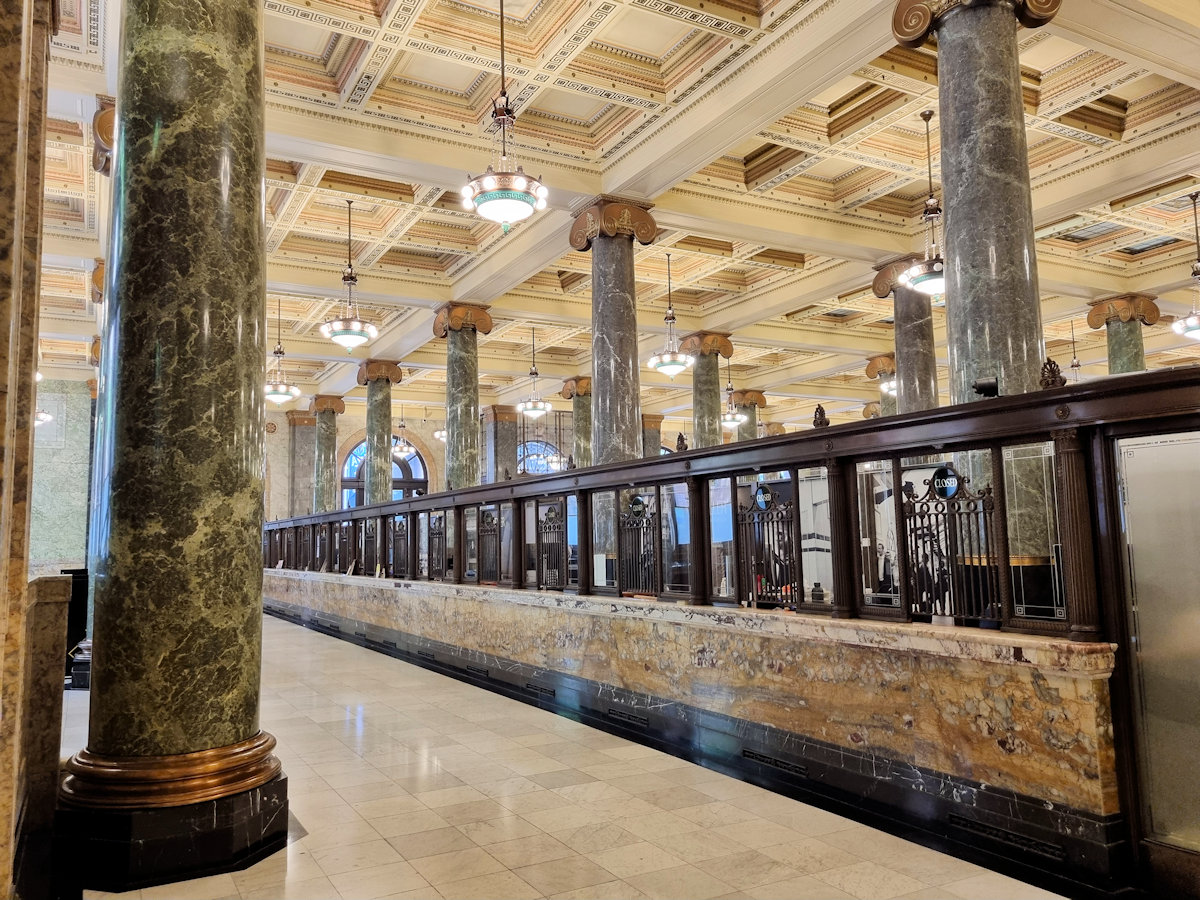
The magnificent ground-floor banking chamber reflects the grandeur of Sydney’s banking industry during the 1920s. Completed in 1928, the chamber features soaring ceilings, polished marble floors, imposing green marble columns and elaborate decorative detailing.


Grand Interior Atrium and Staircase
The Grand Hall shows the elegance of 1920s banking architecture. Its marble staircase, polished stone walls and decorative plasterwork create an impressive entrance. Above, a there is a barrel-vaulted ceiling that rises nearly 12 metres, featuring intricate mosaics and stained-glass panels created by John Ashwin & Co. The colourful windows depict Australian industries, including stonemasons and waterfront workers.


Underground Safe Deposit Vault
Beneath the Commonwealth Bank building is one of Sydney’s most remarkable historic bank vaults. Installed in 1926, its enormous circular steel door weighs approximately 27 tonnes and measures 700 millimetres thick. Manufactured in England by Chubb, the door was transported from Sydney’s docks using a team of 25 horses. The vault was designed to protect customers’ valuables, important documents and safe deposit boxes. Remarkably, the vault remains operational today.

Other Places to Visit in New South Wales
To see what else there is to do in New South Wales, click here.
Leave a Reply