
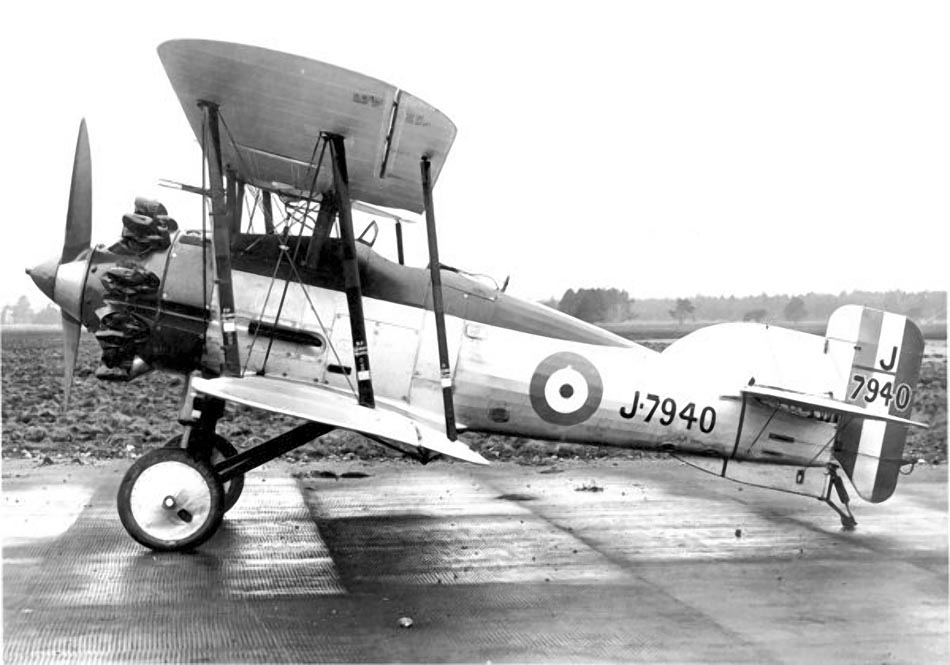
Gloster Goldfinch High Altitude Fighter
The Gloster Goldfinch was a British single-seat, high-altitude biplane fighter developed during the late 1920s. Designed by Henry Folland, it was an improved development of the Gloster Gamecock, intended to meet Royal Air Force requirements.
Only one prototype was constructed, but it appeared in two distinct configurations using the same airframe. The original version featured all-metal wings and a mixed wood-and-metal fuselage. Subsequently, Gloster rebuilt the fuselage entirely in metal, lengthened it and introduced a taller, narrower vertical fin and revised rudder.
Powered by a supercharged 450-horsepower Bristol Jupiter VIIF radial engine, the Goldfinch first flew in May 1927.
During trials at RAF Martlesham Heath, it demonstrated good speed, climbing performance and manoeuvrability. However, its spinning characteristics proved unsatisfactory. Submitted for Air Ministry Specification F.9/26, the aircraft failed to meet structural loading and fuel capacity requirements and was rejected for production.
Initial Configuration


Revised Design


