
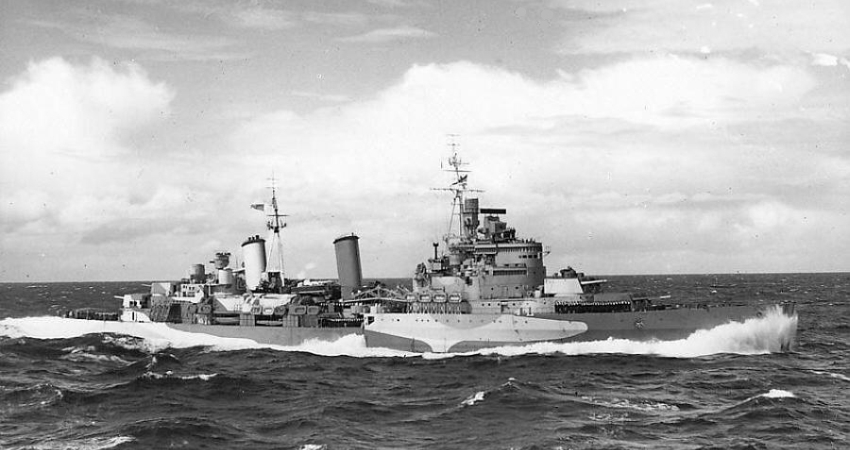
HMS Edinburgh (1939) British Light Cruiser
HMS Edinburgh was a British light cruiser of the Royal Navy, launched in 1938 and commissioned in 1939. She was the last ship of the Town-class cruisers and was designed for speed, long-range patrols, and protection of merchant convoys during the Second World War. Armed with twelve 6-inch guns and equipped with anti-aircraft weapons and torpedo tubes, HMS Edinburgh was one of the Royal Navy’s most modern cruisers at the outbreak of war.
During the early years of the war, Edinburgh served in the North Atlantic and Arctic waters. Her duties included escorting convoys, protecting shipping routes, and intercepting German naval forces. She also took part in operations against German-occupied Norway including the raid on the German-occupied Lofoten Islands, on 4 May 1941.
In April 1942, while escorting Convoy QP 11 from Russia back to Britain, she was struck by two torpedoes fired by the German submarine U-456. Although badly damaged, the cruiser attempted to return to safety with assistance from British destroyers. However, she was attacked again by German destroyers in the Barents Sea. After fierce fighting and further torpedo damage, the order was given to abandon ship.
HMS Edinburgh sank on 2 May 1942, with over 50 crew members losing their lives. The wreck later became famous because she was carrying 4.57 tonnes of Soviet gold bullion intended as payment for wartime supplies. Much of the gold was recovered during underwater salvage operations in the 1980s.


