
Kamakura Japan
Kamakura, Japan is a historic coastal city in Kanagawa Prefecture, approximately 50 kilometres south of Tokyo. Famous for its Buddhist temples, Shinto shrines and beautiful scenery, it makes an excellent day trip from Tokyo.
Kamakura became Japan’s political centre in 1192 when Minamoto no Yoritomo established the Kamakura Shogunate. For more than a century, the city served as the seat of Japan’s military government. Many temples and shrines in Kamakura are from this period.
We spent a day there, walking between the many shrine and temples. An amazing day trip from Tokyo, with a totally different atmosphere although still crowded at the popular spots. Here’s a link to the route we took. Although it show us walking from Hasedera Temple to Tsurugaoka Hachimangū, we caught the train from Hase Station to Kamakura Station. We then walked to Tsurugaoka Hachimangū. We returned to the station via Komachi Street. this area is full of shops and street food. An excellent place to refuel after a busy day.
Getting There From Shinjuku
The easiest way to reach Kamakura is by taking the JR Shōnan–Shinjuku Line directly from Shinjuku Station to Kamakura Station.
- Journey time: Approximately 60 minutes.
- Fare: Approximately ¥1,040 each way (2026).
- Train: Take a southbound service destined for Zushi.
- Tickets: Use a Suica or PASMO card, or purchase a ticket at the station.
Direct services require no transfers. However, not every Shōnan–Shinjuku Line train travels to Kamakura.
Once you arrive, you can explore central Kamakura on foot because most of the sites are close together. However, the Enoden Railway can be used to reach Hasedera Temple and the Great Buddha.
Here’s a link to the route we took. Although we walked from Hasedera Temple to Tsurugaoka Hachimangū, you can catch the train from Hase Station to Kamakura Station. After our last stop we returned to the station via Komachi Street. This area is full of shops and street food. An excellent place to refuel after a busy day.
Sasuke Inari Shrine
Sasuke Inari Shrine is a small Shinto shrine hidden among the hills of Kamakura. Dedicated to Inari, the deity of agriculture and prosperity, the shrine has strong connections with Minamoto no Yoritomo, Japan’s first shogun.
Dozens of vermilion torii gates line the uphill pathway, creating a colourful approach through the forest. Red banners and hundreds of small white fox statues decorate the shrine grounds. These foxes, known as kitsune, represent messengers of Inari.
This was our first stop for the day. Because it was early in the morning, the shrine was very peaceful and we loved walking through the moss covered gardens surrounded by trees.


Zeniarai Benzaiten Shrine
Zeniarai Benzaiten Shrine is a Shinto shrine hidden among the wooded hills of Kamakura. Founded in 1185 by Minamoto no Yoritomo, the shrine is dedicated to Benzaiten and Ugafukujin, deities associated with prosperity and good fortune.
A stone tunnel provides access to the secluded shrine grounds, with wooden torii gates, small shrines and peaceful gardens.
The shrine is famous for its sacred spring, known as Zeniarai-mizu. Worshippers wash coins and banknotes in the water, believing this will increase their wealth. We tried this but unfortunately it hasn’t worked.

Kōtoku-in Temple
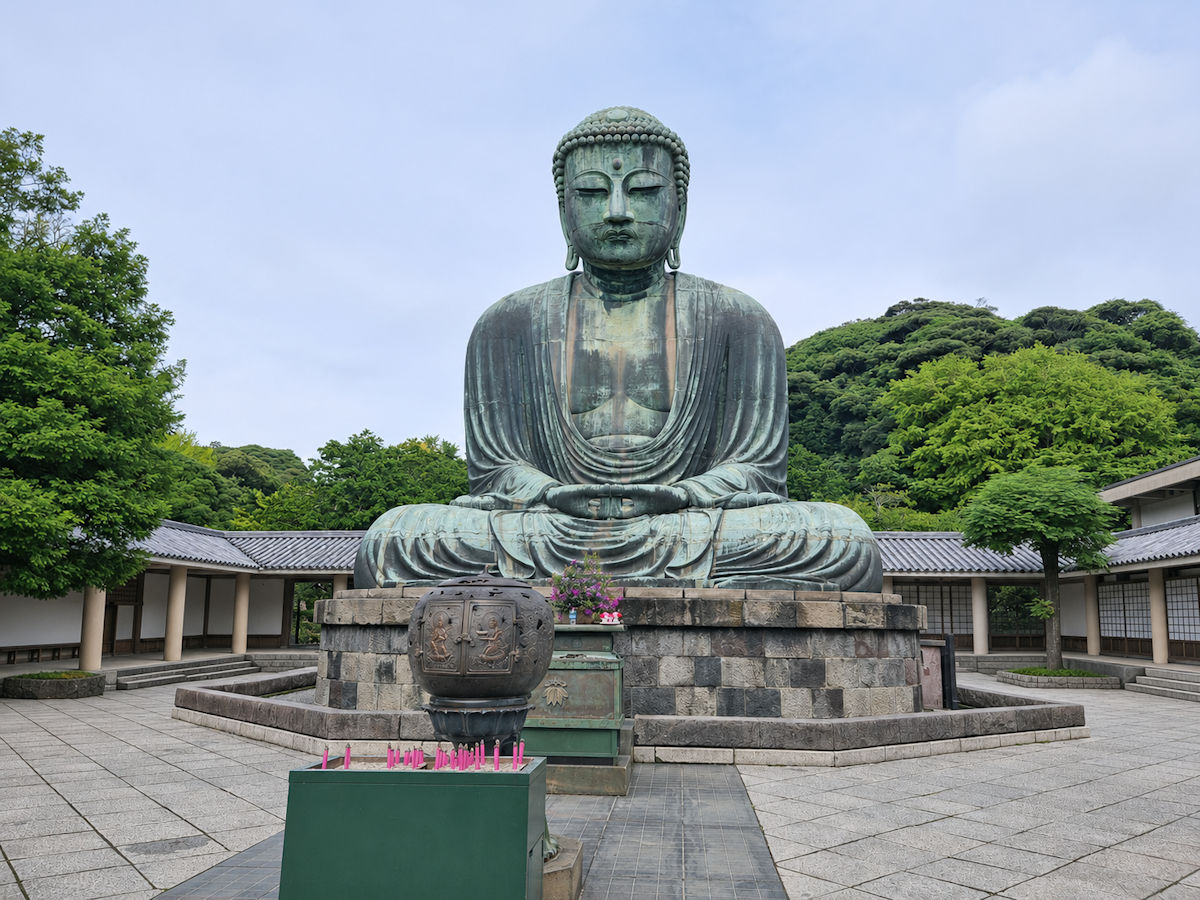
Kōtoku-in Temple is a Buddhist temple, famous for its enormous bronze statue of Amida Buddha, known as the Great Buddha or Kamakura Daibutsu.
Dating from 1252, the statue stands approximately 11.3 metres tall and weighs around 121 tonnes. Originally housed inside a large wooden hall, the Buddha has stood outdoors for centuries after storms destroyed the surrounding building.
The statue depicts Amida Buddha seated in meditation, with a peaceful expression and hands resting in its lap. You can also enter the hollow bronze statue for a small additional fee.


Hasedera Temple
Hasedera Temple is a Buddhist temples, with gardens, traditional architecture and religious statues. Founded in 736, the temple houses a magnificent 9.18-metre-tall wooden statue of Eleven-Headed Kannon, the Buddhist deity of compassion.
The hillside grounds have several temple halls, ponds, stone lanterns and hundreds of small Jizō statues dedicated to deceased children. Another attraction is Benten-kutsu Cave, where carved stone figures depict Benzaiten and her attendants.
There are also excellent views across Kamakura and Sagami Bay from the temple’s observation terrace, particularly on clear days.


Kamakura Beach

Tsurugaoka Hachimangū Shrine
Tsurugaoka Hachimangū Shrine is Kamakura’s most important Shinto shrine, dedicated to Hachiman, the guardian deity of warriors and the samurai. Founded in 1063, the shrine moved to its present location in 1180 under Minamoto no Yoritomo, who later established the Kamakura Shogunate. A grand stone staircase leads to the magnificent vermilion main shrine, decorated with traditional Japanese architectural details.
The grounds have landscaped gardens, ponds, stone bridges and displays of ceremonial sake barrels.


To find out more about Japan, see our blogs here
Leave a Reply