
Imperial Palace East Gardens
The Imperial Palace East Gardens offer an opportunity to explore Japan’s feudal history while enjoying beautifully maintained traditional gardens in the heart of Tokyo. Occupying part of the former Edo Castle grounds, the gardens combine historic stone walls, fortified gateways, guardhouses and peaceful landscaped areas.
Surrounded by modern office buildings, the gardens provide an escape from the busy city and offer a glimpse into Japan’s imperial and samurai heritage.
History of the Imperial Palace East Gardens
The site originally formed part of Edo Castle, which Ōta Dōkan constructed in 1457. In 1590, Tokugawa Ieyasu took control of the castle and began transforming it into a powerful military and administrative centre.
Following his appointment as shogun in 1603, Edo became the headquarters of the Tokugawa shogunate, which governed Japan for more than 260 years. Successive shoguns expanded the castle into an enormous fortified complex surrounded by defensive walls and moats.
At its centre stood an impressive five-storey castle keep, completed in 1638. However, the Great Fire of Meireki destroyed the keep in 1657, and it was never rebuilt. You can explore its surviving stone foundations, known as the Tenshudai.
Following the Meiji Restoration in 1868, imperial authority returned to Japan, and the emperor relocated from Kyoto to Tokyo. Edo Castle subsequently became the site of the Imperial Palace.
In 1968, the Imperial Palace East Gardens officially opened to the public.
Exploring the Gardens
Today, the 21-hectare grounds preserve several important Edo Castle structures, including the Ōte-mon Gate and the Hyakunin-bansho guardhouse.
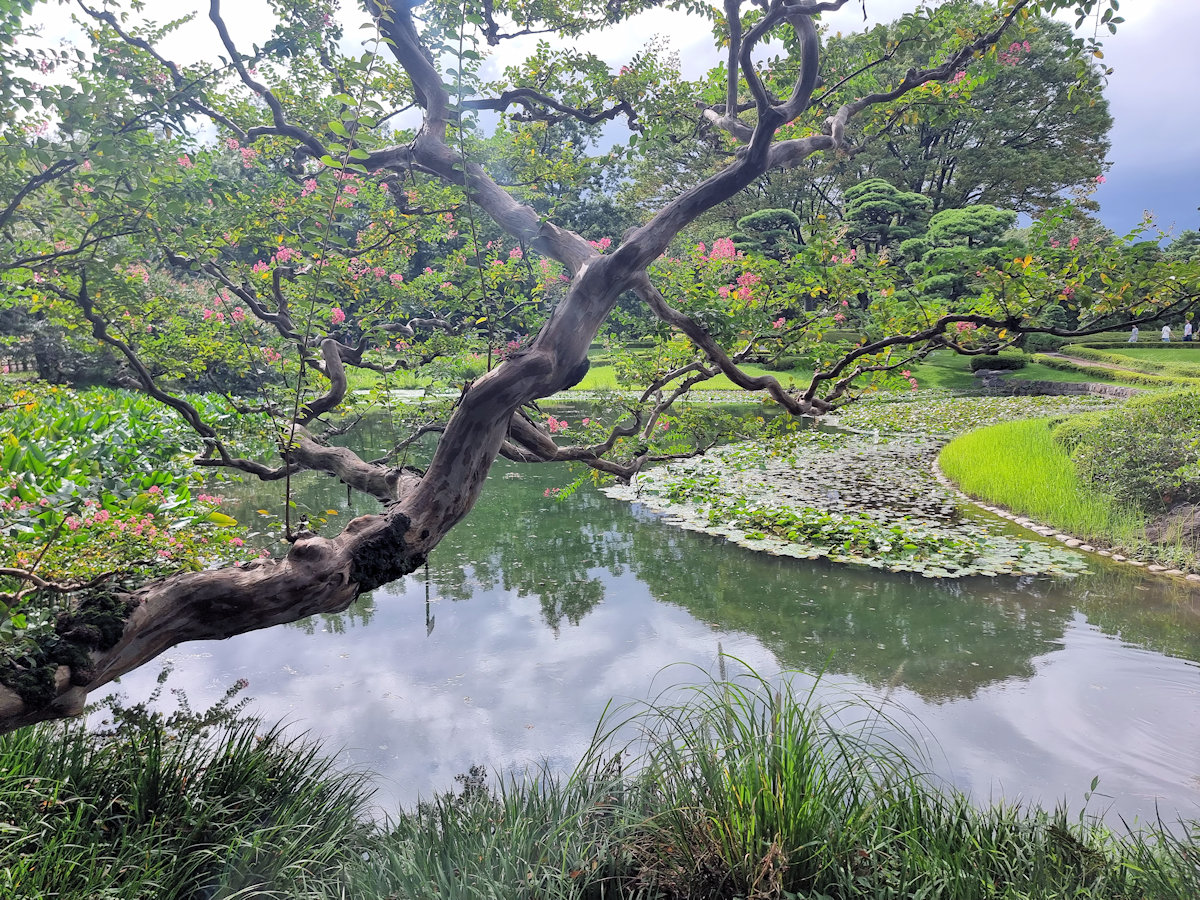
The Ninomaru Garden features traditional Japanese landscaping, ornamental ponds, stone lanterns, sculpted pine trees and small waterfalls. Carefully maintained paths wind through the greenery, providing peaceful surroundings throughout the year.
Together, the historic ruins and beautiful gardens make the Imperial Palace East Gardens one of Tokyo’s most rewarding destinations for visitors interested in Japanese history, architecture and traditional garden design.
How To Get There
The Imperial Palace East Gardens are located in central Tokyo, within easy walking distance of several major railway and subway stations. Public transport is the most convenient way to visit, with the historic Ōte-mon Gate providing the main entrance to the gardens.
The closest stations are:
Otemachi Station with a five-minute walk to the Ōte-mon Gate.
Tokyo Station which is approximately 15 minutes walk away.
Takebashi Station approximately five-minutes’ walk to the Hirakawa-mon Gate.
Admission to the Imperial Palace East Gardens is free. The gardens generally open at 9:00 am, although closing times vary throughout the year. They are normally closed on Mondays and Fridays, so check the official Imperial Household Agency website before visiting.
We spent around 90 minutes to explore the gardens, historic guardhouses, castle foundations and traditional Japanese landscaping.


To find out more about Japan, see our blogs here
Leave a Reply